RupeeCase | Systematic Quantitative Investing Terminal by QC AlphaRupeeCase | Systematic Quantitative Investing Terminal by QC Alpha
Start free
Exchange Plaza in Bandra Kurla Complex, Mumbai, seen from above, glass towers beside the mangroves of the Mithi river

Index investing

An algo
like an index.

Index investing in India takes the guesswork out. RupeeCase takes it further: a better rule, published, in your own demat.

  • 18rule based indices
  • NSE, BSEIndian markets only
  • Your dematyou hold every share
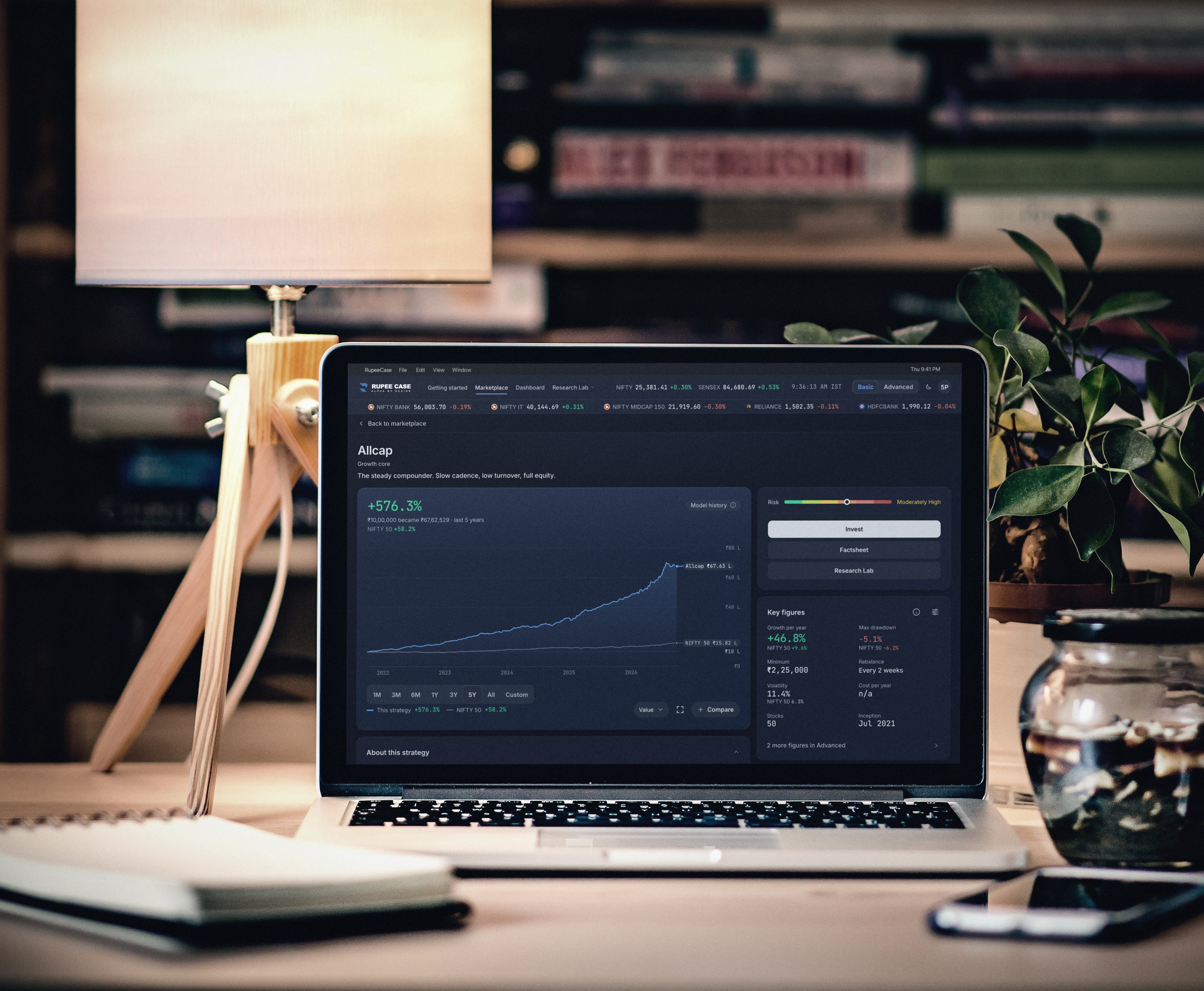
A laptop on a desk at night beside a lamp, showing a RupeeCase strategy page with its model history chart

01Validate

Read the rule.
Test the record.

Every strategy shows its universe, its rule, its cadence and the full model back test after costs, against the Nifty 50.

02From index to algo

What an index
really is.

  1. 01An index is a ruleThe Nifty 50 picks by size. That is the whole rule.
  2. 02A plain index, or a better ruleChosen by size, or by a published quantitative rule.
  3. 03An algo like an indexUniverse, rank, hold the top, rebalance on a calendar.
  4. 04Every rebalance, publishedIn, out and held, on each date.
A plain indexIllustration

Size is the whole rule.

Illustration of a size weighted index of 50 companies: the biggest circles carry the most weight, whatever they did last quarter. Not real weights.

The differenceWhat makes an index superior

Change the rule, change the result.

A plain indexA RupeeCase index
Chosen byCompany sizeA published quantitative ruleA published rule
ChangesTwice a yearA fixed short cycle, every rebalance loggedShort fixed cycle, logged
Who holds itA fund, you hold unitsA fund; you hold unitsYou, in your own dematYou, in your demat
CostsA yearly fee on the whole amountYearly fee on it all0.2% of traded value, only when it trades0.2% of what trades

Superior means the rule beat the plain index over its published back test window, with brokerage, STT, exchange charges and GST deducted.

An algo like an indexAllcap, as an example

Five fixed steps. Run the same way every time.

UniverseNIFTY TOTAL MARKET01RankBY THE RULE02HoldTOP 5003RebalanceEVERY 2 WEEKS04PublishIN, OUT, HELD05 MODELS OPTIMISED WITH AI AND MACHINE LEARNING, RULE FROZEN BEFORE IT RUNS
  1. 01UniverseNifty Total Market
  2. 02Rankby the published rule
  3. 03Holdthe top 50
  4. 04Rebalanceevery 2 weeks
  5. 05Publishin, out and held

Allcap: 50 stocks from Nifty Total Market, rebalanced every two weeks, minimum ₹2,42,000 (published lineup, 17 Jul 2026).

RebalanceModel record

On every date: in, out and held.

03Validate, from the record

Allcap against
the Nifty 50.

Drawn from the published model history after charges. Model, back tested; not a promise of future returns. Hover or tap any month.

04In the product

Three stages,
three screens.

Recorded from the RupeeCase terminal on sample data. Not a render, not a mock up.

02

Validate

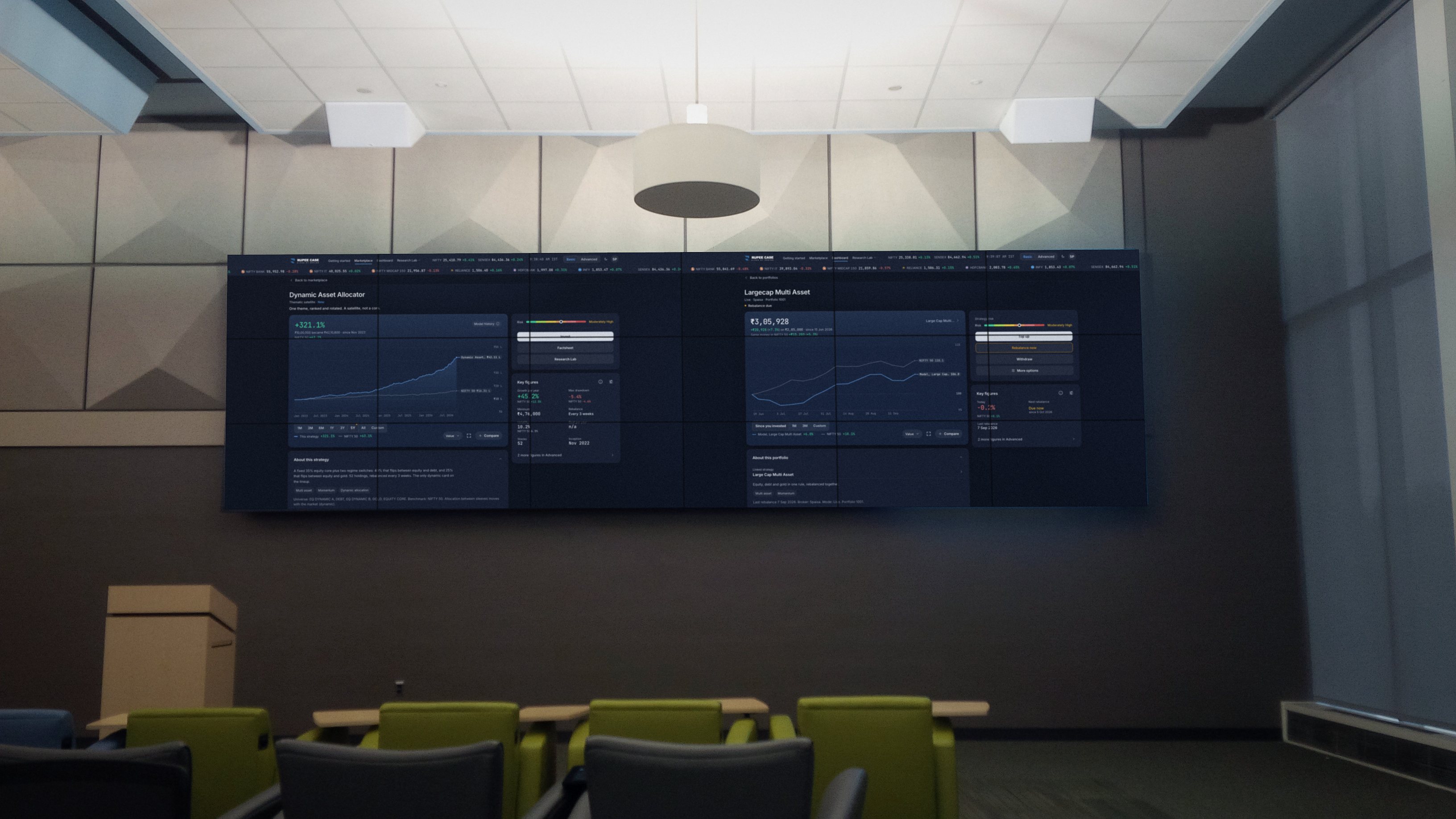
Each strategy page draws its model history against the Nifty 50, with every drawdown, holding and rebalance. Hover any month.

03

Invest

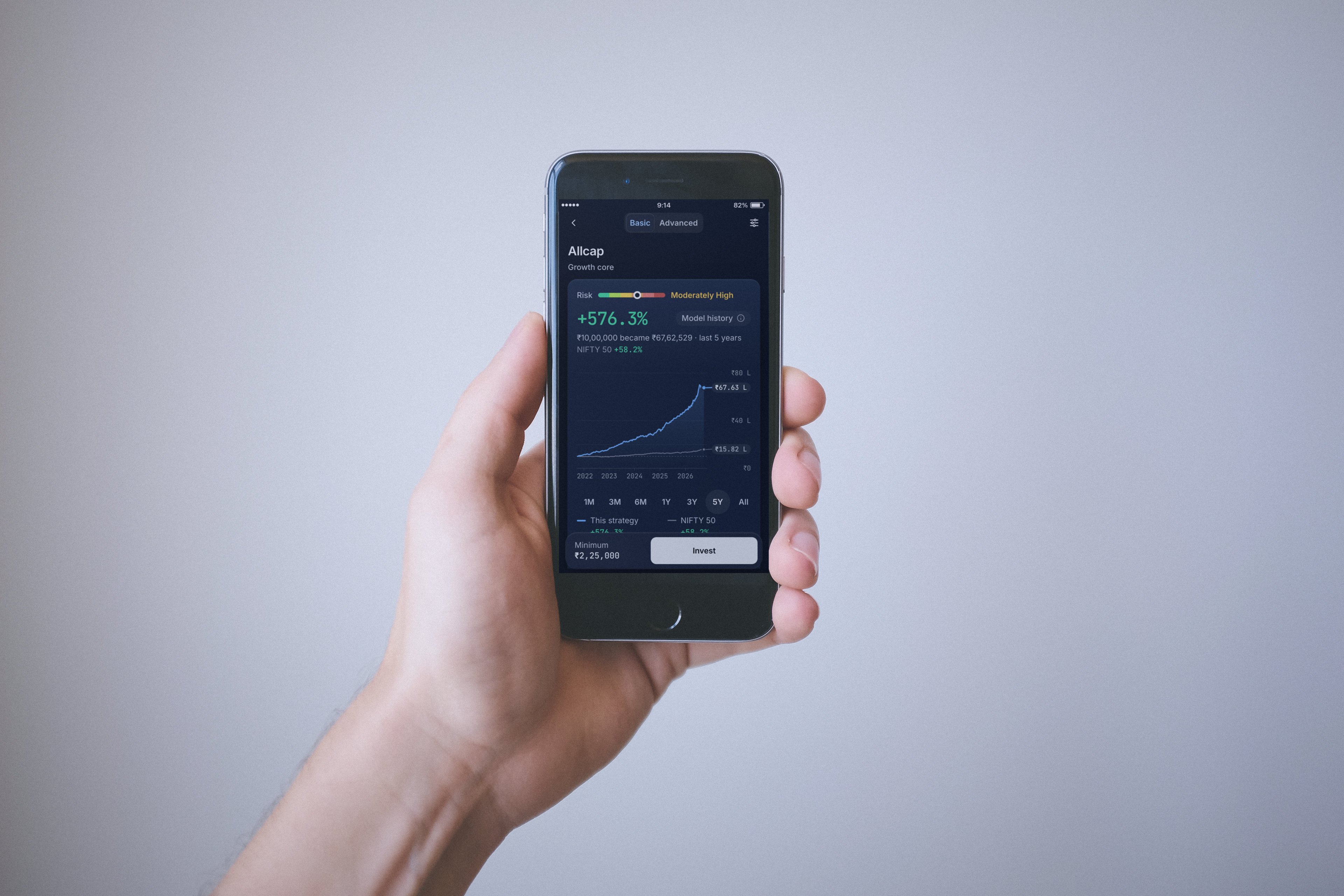
Invest at or above the minimum, in practice mode first if you like. On each rebalance you see what goes in and out, approve it, and your broker executes.

05Questions

Index investing, answered.

Straight answers, written to be quoted.

What is index investing?

Index investing means owning a basket of stocks chosen by a fixed rule instead of a person's judgement. A plain index such as the Nifty 50 uses one rule, company size. Index investing keeps costs low and removes guesswork because the rule decides.

What is a rule based index?

A rule based index keeps the idea of an index, a published rule, a universe and a calendar, but changes the rule: momentum, quality, value or an asset mix, scored on data and ranked, with the top names held. Each RupeeCase strategy works this way.

What does RupeeCase mean by "an algo like an index"?

Every RupeeCase strategy is an algorithm packaged like an index: a fixed universe (for example Nifty Total Market or Nifty Midcap 150), a published ranking rule, a set number of holdings and a fixed rebalance cadence of one to four weeks. You can read it, test it and own it.

How do I validate a back test?

Check that the rule was fixed before the test, that costs are deducted (RupeeCase deducts brokerage, STT, exchange charges and GST), that the window and the benchmark are stated, and look at the worst drawdowns, not only the return. Model, back tested figures are not a promise of future returns.

Where do I hold an index from RupeeCase?

In your own demat account at your own broker. 5paisa, Zebu and Arrow are live; Kotak Securities, Groww and Angel One are in integration. RupeeCase never holds your money or your shares.

06Next

Keep going.

Own the index.
Keep your broker.

Every return figure on this page is Model, back tested, with its as of date shown beside it, after charges, and not a promise of future returns. RupeeCase is a technology platform operated by QC Alpha Technologies Pvt Ltd. It is not a mutual fund, a PMS, an AIF or a SEBI registered investment adviser. Research by QC Alpha Research Pvt Ltd, SEBI research analyst registration pending. Trades execute through your own SEBI registered broker. Investments in securities markets are subject to market risks. Nothing here is investment advice.

Photography: NSE Exchange Plaza by KirtiKakad, CC BY-SA 4.0; Video wall with Goddard Logo by Innoface Systems, CC BY-SA 4.0; Coastal road, Mumbai, in the evening light. November 2025 by Qiw007, CC BY 4.0; B&W motherboard circuits by Jonathan Cutrer from San Angelo, Texas, USA, CC BY 2.0; A night in Mumbai by Siddharth Shah, CC BY-SA 4.0; other photographs CC0, public domain or our own, regraded; device screens show the RupeeCase app on sample data. Full list: credits.