RupeeCase | Systematic Quantitative Investing Terminal by QC AlphaRupeeCase | Systematic Quantitative Investing Terminal by QC AlphaRupeeCase | Systematic Quantitative Investing Terminal by QC AlphaRupeeCase | Systematic Quantitative Investing Terminal by QC Alpha
Start free
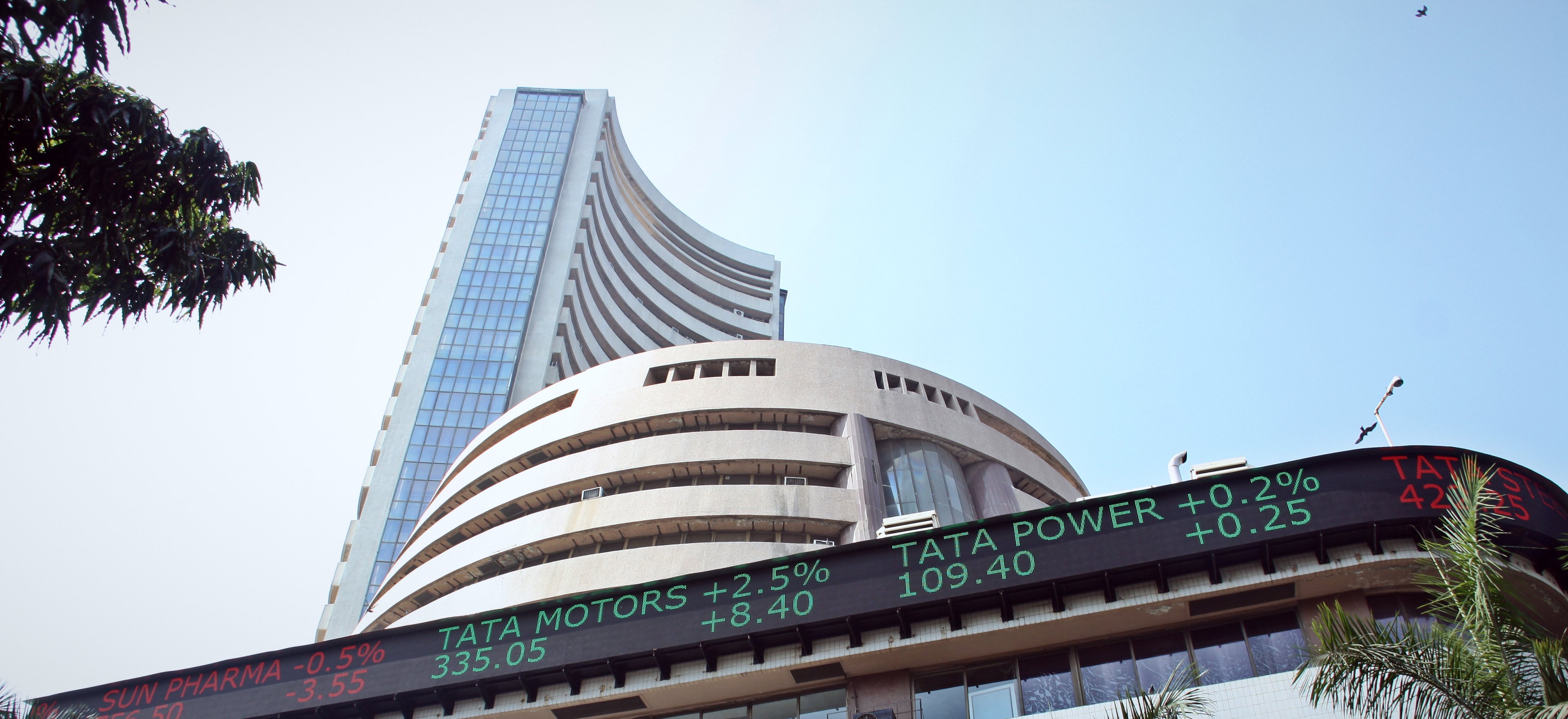
Phiroze Jeejeebhoy Towers on Dalal Street, Mumbai, with an LED stock ticker running around the rotunda

Pricing

One fee per rebalance.
Nothing else.

For the 18 retail strategies, like brokerage: 0.2% of traded value, only when a rebalance trades. No subscription, no AUM fee, no profit share. In the published rebalance record that came to about 1.2% to 3.3% of capital a year, by strategy.

Hands on a laptop in soft daylight, the RupeeCase pricing page on screen

01On what trades

Nothing trades.
Nothing charged.

The fee is on the value that actually trades at a rebalance, never on the whole portfolio. If the holdings stay identical, the fee is zero.

The price, all of it

0.2%

of traded value, per rebalance, on the 18 retail strategies. Nothing else.

  • ₹0 when a rebalance keeps every holding
  • No subscription, AUM fee or profit share
  • No lock in, entry load or exit load
  • 30 days notice before any increase; decreases at once

Worked example

₹1,00,000 deployed, 30% trades₹30,000

× 0.2%, per rebalance₹60

× 13 rebalances a year₹780 0.78%

Brokerage and statutory charges go through your own broker, as with any trade. Institutions and family offices: tailored mandates with tickets from US$1 million, priced to each requirement. Talk to us.

Rebalance dayTry it

30% of the portfolio trades. The fee is on that part only.

Portfolio
Cadence
Traded value₹30,000 × Fee0.2% = This rebalance₹60

A year at 13 rebalances₹7800.78% of capital

Illustration. Turnover changes by strategy and by cycle; each strategy publishes its own cadence. In the published model rebalance record, the platform fee came to about 1.2% to 3.3% of capital in each strategy's latest year (Allcap about 2.2%, Nifty 50 Equal Weight under 0.1%), an estimate that varies year to year; each strategy page shows its own. You are only ever charged on the value that actually traded.

02In the app

Where the cost shows up.

Model returns are shown after estimated charges, the fee follows the turnover at each rebalance, and your own charges sit on the Ledger tab.

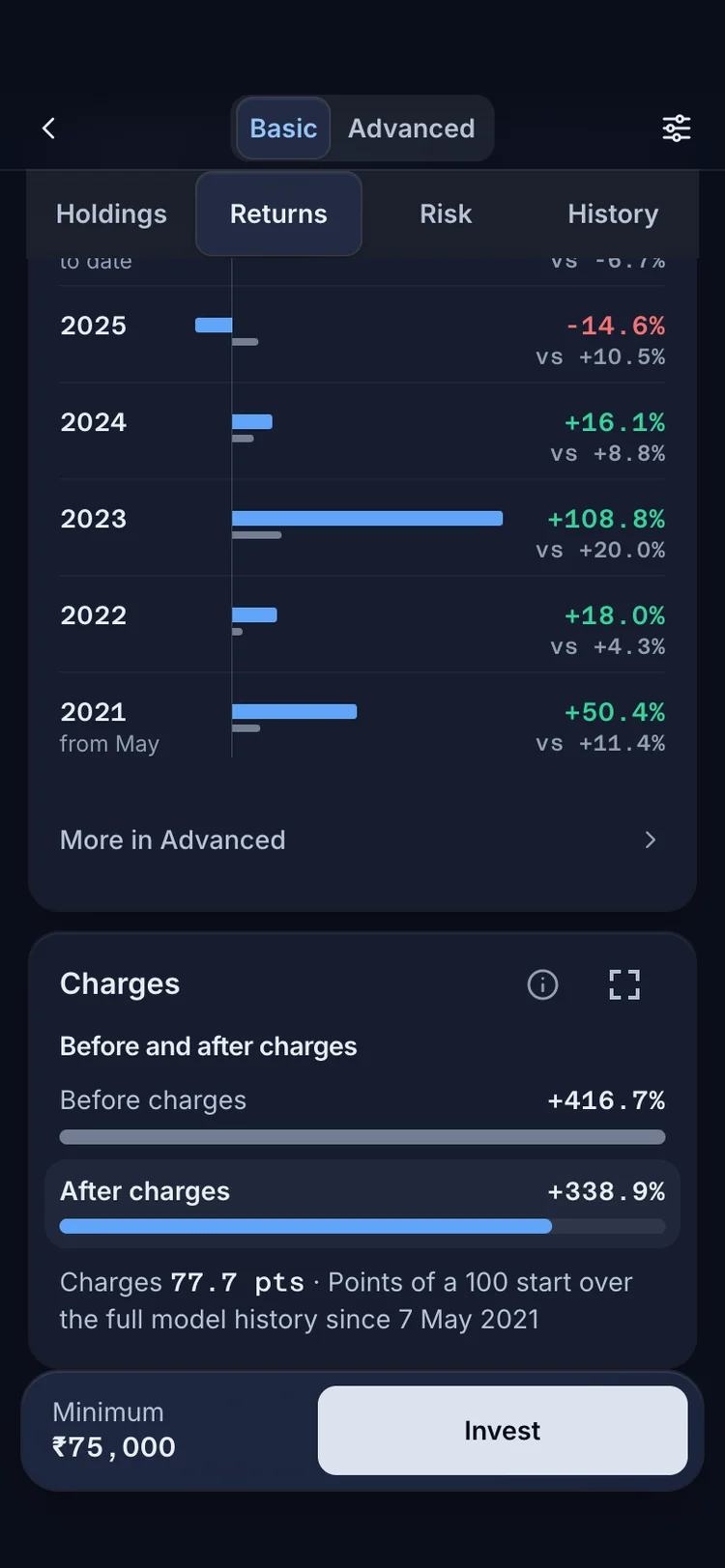
  1. The RupeeCase app on a phone. Model returns are shown after estimated charges: brokerage, STT, exchange fees and GST.
    1Model returns are shown after estimated charges: brokerage, STT, exchange fees and GST.
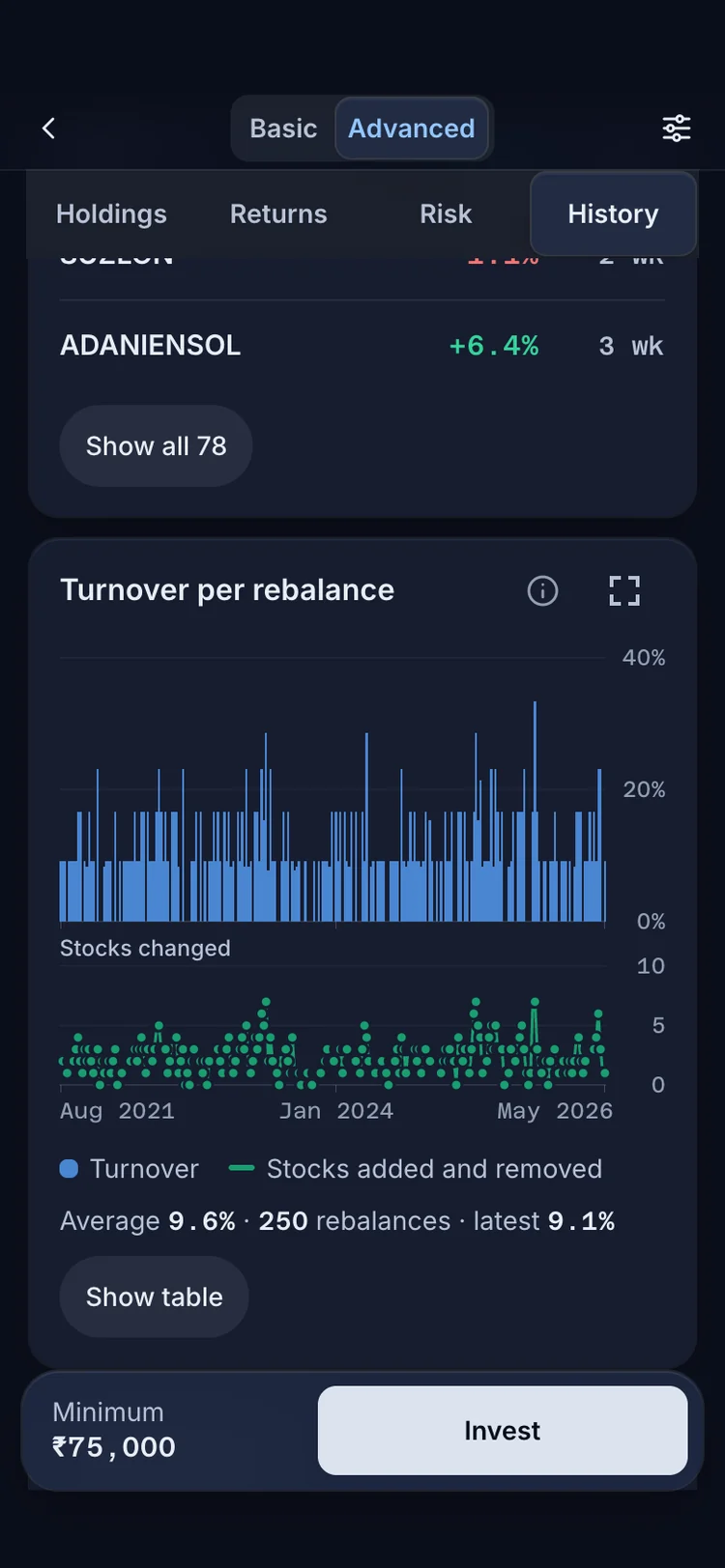
  2. The RupeeCase app on a phone. Turnover per rebalance, from the model record: the fee is charged only on what trades.
    2Turnover per rebalance, from the model record: the fee is charged only on what trades.
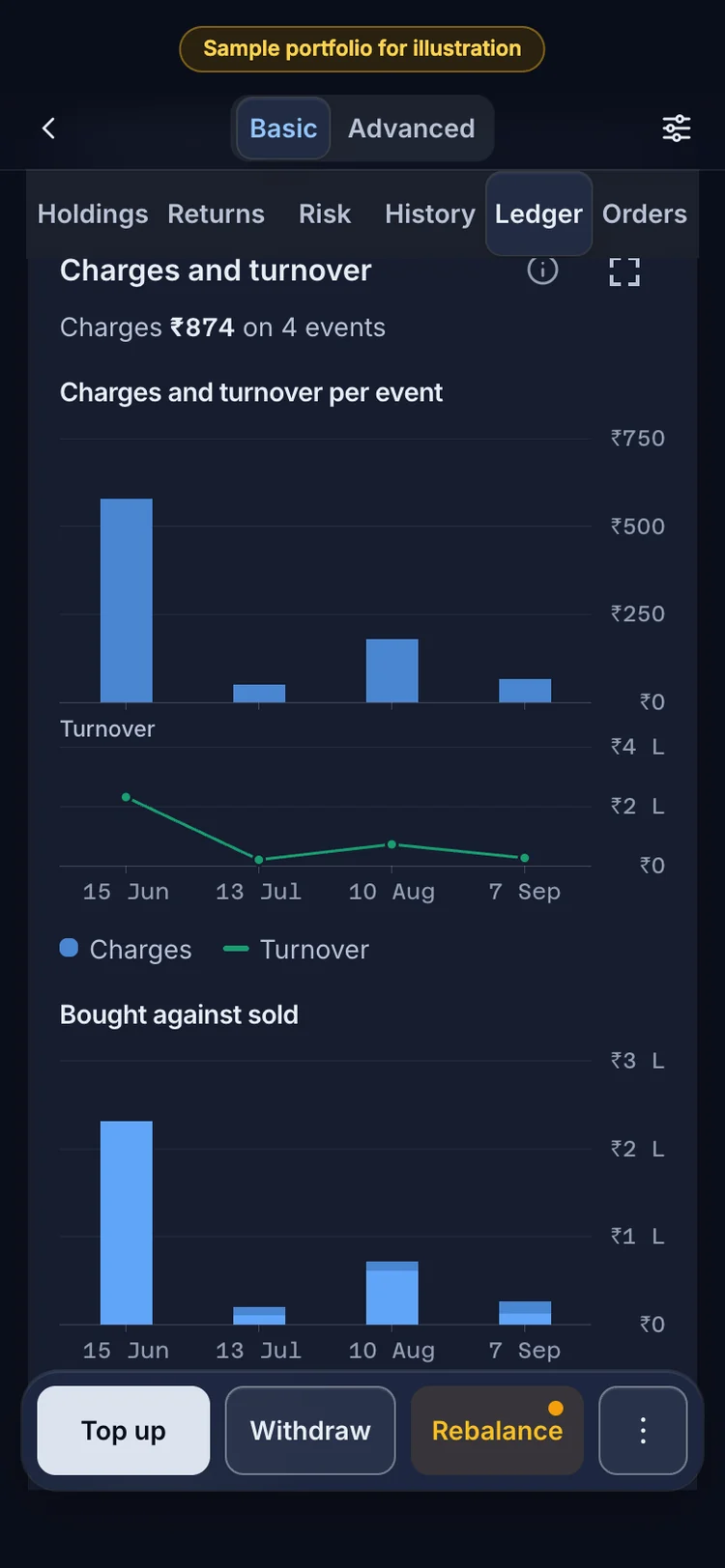
  3. The RupeeCase app on a phone. Your own charges and turnover, event by event, on the Ledger tab.
    3Your own charges and turnover, event by event, on the Ledger tab.
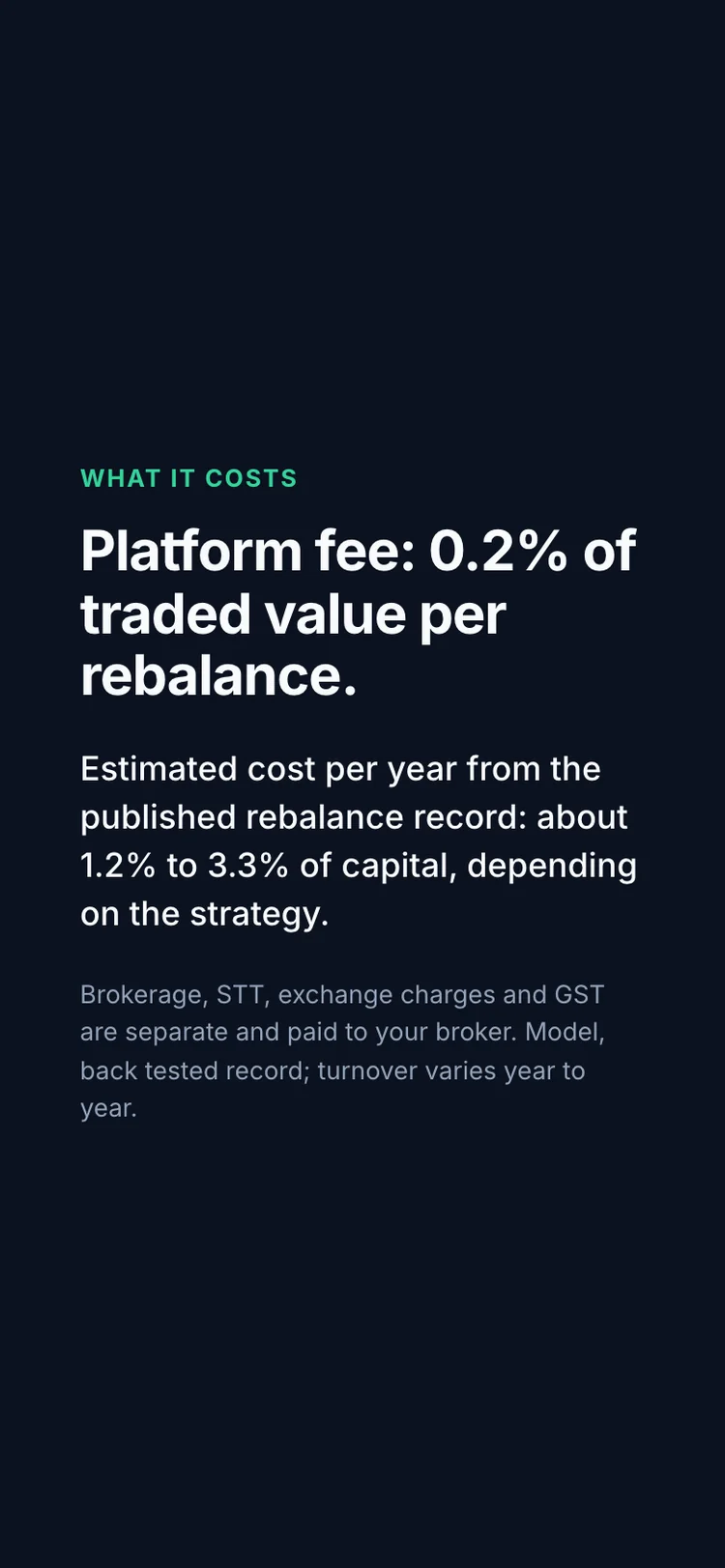
  4. The RupeeCase app on a phone. Platform fee: 0.2% of traded value per rebalance. About 1.2% to 3.3% of capital a year in the published record, depending on the strategy.
    4Platform fee: 0.2% of traded value per rebalance. About 1.2% to 3.3% of capital a year in the published record, depending on the strategy.

Screens from the RupeeCase app. Strategy figures are the published model figures of Energy Basket, back tested; ledger figures are a sample for illustration.

The Charges card shows the model before and after estimated charges. Energy Basket, model, back tested, since May 2021.
Steps in this video
  1. The Charges card shows the model before and after estimated charges. Energy Basket, model, back tested, since May 2021.
  2. Year by year returns are after charges too. Model, back tested. Not a promise of future returns.
  3. The platform fee is charged on what trades at each rebalance. Turnover per rebalance, Energy Basket, model record.
  4. Your own charges and turnover are on the Ledger tab.

03Next to the alternatives

The numbers
worth comparing.

Typical yearly cost of a mutual fund, a PMS and a Category III AIF, beside RupeeCase at the settings you picked above.

Every difference, side by side

Fund, PMS and AIF: typical rates, not any one manager; minimums are the SEBI floors. Brokerage and taxes are separate for all.

  • Subscriptionidle accounts cost nothing
  • AUM feeno share of your assets
  • Performance feeno profit share, no carry
  • Loadsno entry or exit load
  • Research feeevery rule published free

04Before it trades

You approve.
Then it trades.

The fee applies only when a rebalance executes in your own broker account, as one line on the contract note. Traded value counts both the buys and the sells; capital that does not trade is not charged. Screens on sample data.

Rebalance dayContract note, illustration
Traded value₹30,000
RupeeCase fee, 0.2%₹60
Brokeragevia broker
STT, stamp duty, exchange, SEBI, GSTstatutory

05Questions

Common
questions.

What is RupeeCase?

RupeeCase is a systematic investing terminal built by QC Alpha Technologies Pvt Ltd. It runs 18 rules based indices on NSE and BSE: you pick an index, link your own broker, and the platform sends the orders each rebalance generates. It is a technology platform, not a fund or a PMS.

Is RupeeCase SEBI registered?

RupeeCase is a technology platform operated by QC Alpha Technologies. It is not a fund, a PMS or a SEBI registered investment adviser. A SEBI Research Analyst registration has been applied for via QC Alpha Research Pvt Ltd and is pending. Read the disclaimers and the grievance process.

How does rebalancing work?

Each index re runs its rule on a fixed calendar, from every week to every 4 weeks. The platform shows the names going in and out, you approve the rebalance, and your broker places the orders. Every rebalance is published on its date in the rebalance record. More answers in the RupeeCase FAQ.

How much does RupeeCase cost?

For the 18 retail strategies, 0.2% of traded value each time a strategy rebalances, and only when trades execute. No subscription, no AUM fee, no performance fee. Brokerage and statutory charges go through your own broker at standard rates.

How are institutional and family office mandates priced?

Tailored mandates for institutions and family offices, with tickets from US$1 million. Structure, reporting and pricing are set to each requirement. Speak to us at tanmay@rupeecase.com, or see institutions and family offices.

Is there a lock in?

No. The stocks sit in your own demat account, so you can add capital, withdraw or pause whenever you want, subject to normal broker settlement. No entry load, exit load or early exit penalty.

What does 0.2% of traded value mean?

The fee applies only to the rupee value of shares that actually trade at a rebalance, not to your whole portfolio. If 30% of ₹1,00,000 trades, that is ₹30,000, so that rebalance costs ₹60. If nothing trades, the fee is zero.

Are there costs besides the 0.2% fee?

Yes, the ones your broker charges: brokerage, STT, stamp duty, exchange transaction charges, SEBI turnover fee and GST on brokerage. They are the same whether you run a RupeeCase strategy or trade by hand, and they appear on your contract note.

Is RupeeCase a fund or a PMS?

No. RupeeCase is a technology platform, not a fund or a PMS, and not a SEBI registered investment adviser or portfolio manager. You own the stocks in your own demat account through your broker.

Pay when it trades.
Not before.

RupeeCase is operated by QC Alpha Technologies Pvt Ltd and is not a SEBI registered investment adviser or portfolio manager. SEBI Research Analyst registration is pending. Nothing here is personalised investment advice. For the complete cost picture see the Terms, the Disclaimers and the fee schedule in your broker contract note.