



Why invest outside India at all
An Indian investor's salary, house, deposits and pension are all in rupees and all tied to the Indian economy. Adding Indian shares adds more of the same bet. A slice of foreign assets brings three things the Nifty cannot: businesses India does not have, such as the largest global technology and healthcare companies; returns that do not always move with Indian shares; and some protection when the rupee weakens, because foreign assets are priced in other currencies. The note home bias and the module on gold, commodities and international investing set out the case and its limits.
Route one: Indian funds and ETFs that invest abroad
The simplest route keeps everything in rupees and in India: an international ETF on NSE or BSE, or a fund of funds that invests in a foreign fund. You buy in rupees, the fund handles currency and custody abroad, and your statement shows rupee values.
- ETF premiums
- Thin trading
Read one more paragraph and a list, 127 words
Two cautions come from the data:
- ETF premiums. International ETFs trade while the underlying market is shut, and when new units cannot be created freely the price can run well above the value of the holdings. On 12 Oct 2026 the Motilal Oswal Nasdaq 100 ETF (MON100) closed at ₹324.21 against a NAV of ₹287.02, a 12.96% premium; at the end of Dec 2024 it was 21.95%. The ETF tracking error and liquidity guide charts it. A fund of funds deals at NAV and avoids the premium, at the cost of a second layer of expenses.
- Thin trading. In the year to 12 Oct 2026 MON100 traded a median of about ₹21 crore a day on NSE; several other international ETFs traded ₹1 crore to ₹6 crore.
Route two: the Liberalised Remittance Scheme
RBI's LRS lets every resident individual, minors included, remit up to USD 2,50,000 in each April to March financial year for permitted current and capital account purposes, including buying foreign shares and funds. Travel, gifts and education abroad draw on the same limit.
the most a resident individual can remit under LRS in a financial year, all purposes together
RBI LRS FAQ
of LRS remittances before TCS applies
Income-tax Act, 2025, section 394(1)
TCS above that, for purposes other than education or medical treatment
Section 394(1), Table Sl. No. 7
TCS above ₹10 lakh for education or medical treatment, from 1 Apr 2026
Finance Act 2026
Read 2 more paragraphs, 124 words
You must give your PAN, route capital account remittances through one designated bank branch, and fill in Form A2. LRS cannot be used for margin trading on foreign exchanges or for trading in foreign exchange abroad.
TCS is not an extra tax, but it is cash tied up. The bank collects it when you remit, and section 390(5) of the 2025 Act treats it as tax paid on your behalf. It appears in your tax statement and is set against your tax for the year, with any excess refunded after you file. On a large remittance that is a sizeable sum held until your return is processed. Remittances for education funded by an education loan from a specified financial institution carry no TCS.
What a foreign sleeve did: the Nasdaq 100 ETF since 2012
The longest record of a foreign equity ETF on NSE is Motilal Oswal's Nasdaq 100 ETF, listed as N100 and now MON100. I took its month end closing prices, adjusted for the 1 to 10 unit split of 17 Jun 2021, and compared them with the Nifty 50.
Rebased to 100 at the end of Feb 2012, the Nasdaq 100 ETF reached about 2,553 by 12 Oct 2026 on NSE prices, and the Nifty 50 about 415.
Month end NSE closes of N100 and MON100 (prices before 17 Jun 2021 divided by 10) and the Nifty 50 price index, Feb 2012 to 12 Oct 2026. Exchange prices include any premium to NAV, 12.96% on 12 Oct 2026. Past returns.
| Asset | 2013 | 2014 | 2015 | 2016 | 2017 | 2018 | 2019 | 2020 | 2021 | 2022 | 2023 | 2024 | 2025 |
|---|---|---|---|---|---|---|---|---|---|---|---|---|---|
| Nasdaq 100 ETF | 59.5 | 18.8 | 13.6 | 17.6 | 36.9 | -9.8 | 40.6 | 50.4 | 30.1 | -26.2 | 53.6 | 56.8 | 8.1 |
| Nifty 50 | 6.8 | 31.4 | -4.1 | 3.0 | 28.7 | 3.2 | 12.0 | 14.9 | 24.1 | 4.3 | 20.0 | 8.8 | 10.5 |
Year end NSE closes. Nasdaq 100 ETF on exchange prices, split adjusted; Nifty 50 price index. 2026 to 12 Oct: ETF +40.0%, Nifty 50 −14.4%. Past returns.
Read 2 more paragraphs, 148 words
Over the whole period the ETF returned 24.81% a year against 10.23% for the Nifty 50 price index. Part of that is the premium on the last day; most of it is the index itself, converted into rupees, in an unusually strong decade for US technology shares. That is exactly why the figure should not be extrapolated: the same index fell 26.22% in 2022 and its month end value fell 31.59% from Sep to Dec 2018.
The pattern that matters for diversification is in the bad years. In 2018 and 2022 the ETF fell while the Nifty rose; in 2015 the Nifty fell while the ETF rose. In 2026 to 12 Oct the Nifty fell 14.41% and the ETF rose 39.97%. They have fallen together too: from 14 Jan to 23 Mar 2020 the Nifty fell 38.44% and the ETF 19.79%. Monthly returns had a correlation of 0.20.
How much a foreign sleeve changed a portfolio
I mixed the Nifty 50 with the Nasdaq 100 ETF and reset the mix each December, from the end of Dec 2012 to 12 Oct 2026, on month end prices.
| Nifty 50 and Nasdaq 100 ETF | CAGR | Worst month end fall |
|---|---|---|
| 100 and 0 | 10.15% | −29.34% |
| 90 and 10 | 11.96% | −26.85% |
| 80 and 20 | 13.72% | −24.36% |
| 70 and 30 | 15.40% | −22.18% |
- All Nifty 50−29.34%
- 10% Nasdaq 100 ETF−26.85%
- 20% Nasdaq 100 ETF−24.36%
- 30% Nasdaq 100 ETF−22.18%
Worst month end fall of each mix, NSE closes, end Dec 2012 to 12 Oct 2026, rebalanced each December.
MythUS shares always beat Indian shares, so a foreign fund is a return booster.
FactThe Nasdaq 100 ETF lost to the Nifty 50 in 2014, 2018, 2022 and 2025. Its case is that it moves differently, not that it always wins.
Read one more paragraph, 80 words
The worst fall shrank because the two rarely fell hard at the same time, and the return rose because one leg had an unusually strong run. The first effect is the reason to diversify; the second is luck you cannot plan on. A broad global index rather than one technology heavy index would have had a different, likely lower, return and similar diversification. The drift threshold calculator helps decide when a sleeve that has run ahead should be trimmed back.
The tax on foreign investments
- India listed international ETFs
- International funds of funds
- Foreign shares bought through LRS
Read one more paragraph and a list, 147 words
- India listed international ETFs are listed securities: held more than 12 months, the gain is long term and taxed at 12.5% (section 197 of the 2025 Act, formerly section 112); held 12 months or less, it is taxed at your slab rate. They are not equity funds for tax, because they do not hold Indian shares, so the 20% and ₹1.25 lakh rules do not apply.
- International funds of funds are not listed: more than 24 months for long term and 12.5%, otherwise your slab rate.
- Foreign shares bought through LRS are not listed in India: more than 24 months for long term at 12.5%, otherwise your slab rate. Dividends are added to your income.
The holding periods come from section 2(101) of the 2025 Act (section 2(42A) of the 1961 Act). The note one country bet works through what a single country exposure risks.
How this shows up in RupeeCase
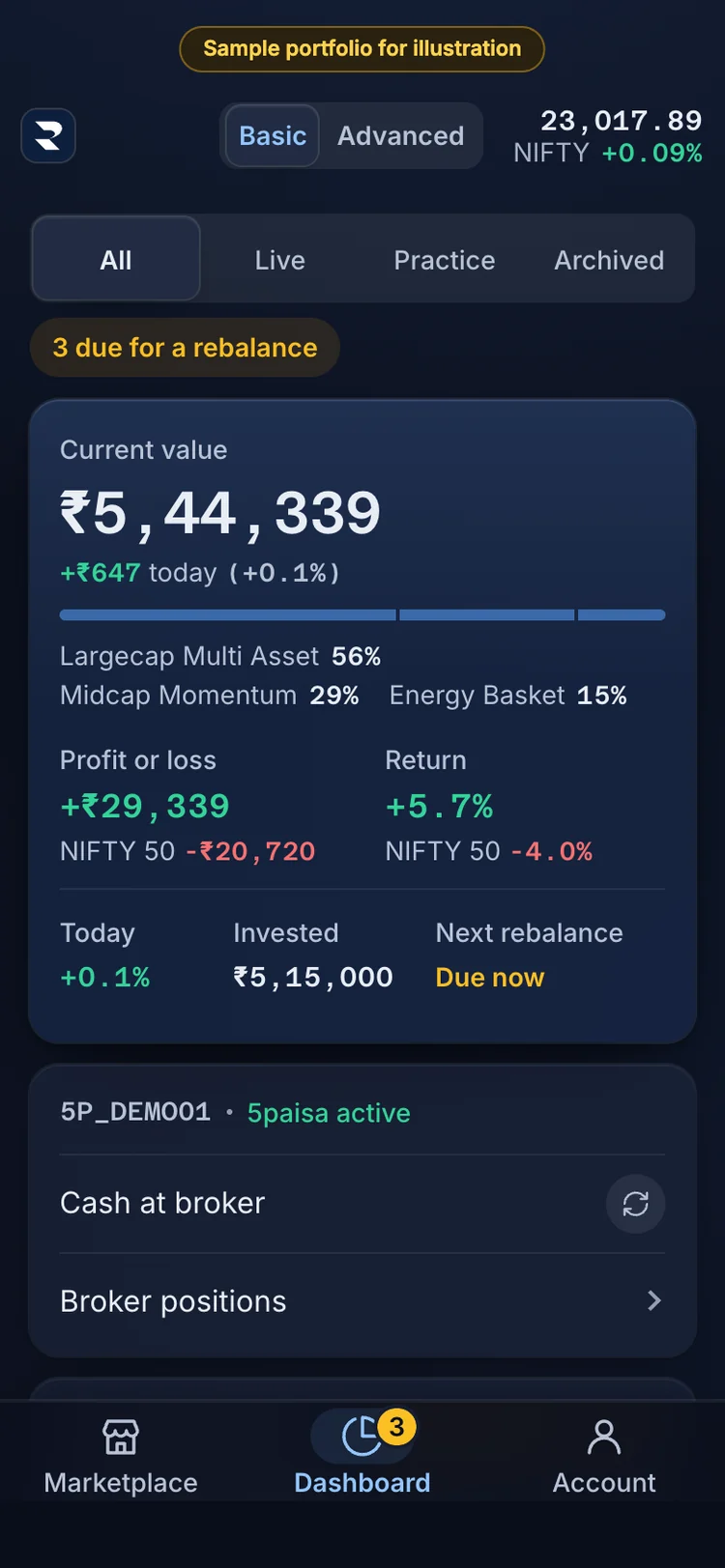
1A due rebalance shows on the Dashboard and as a badge on the tab bar. 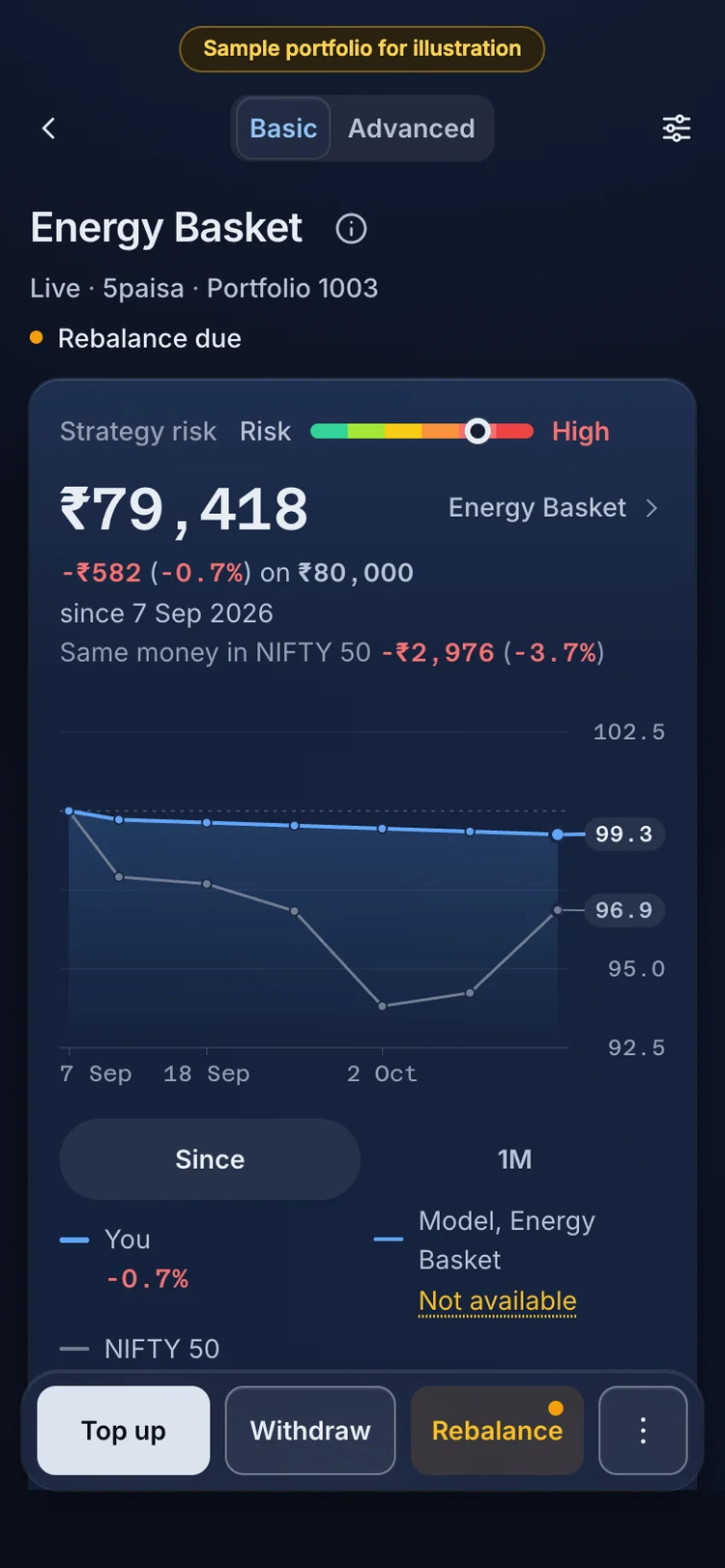
2The portfolio says a rebalance is due. 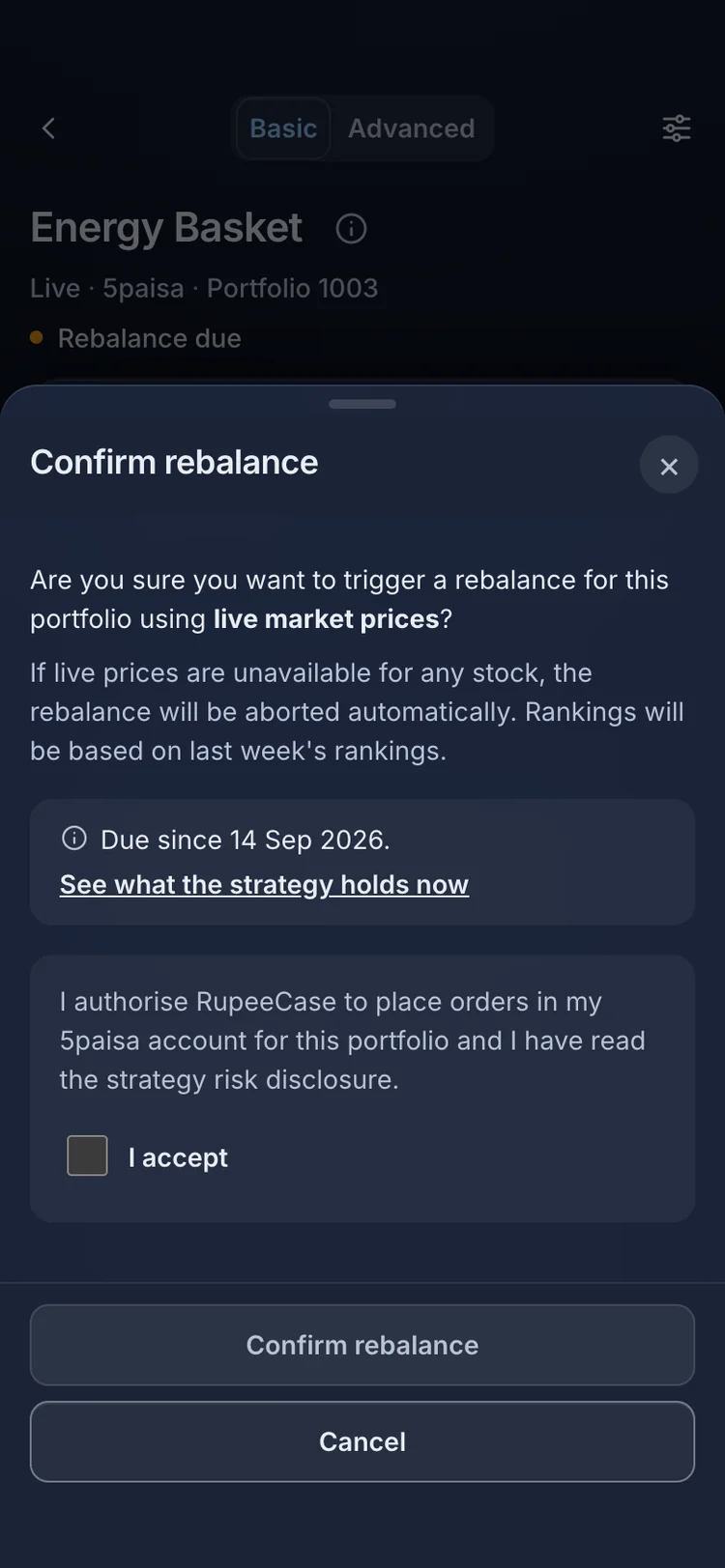
3Confirm rebalance says when it fell due and asks for your consent. 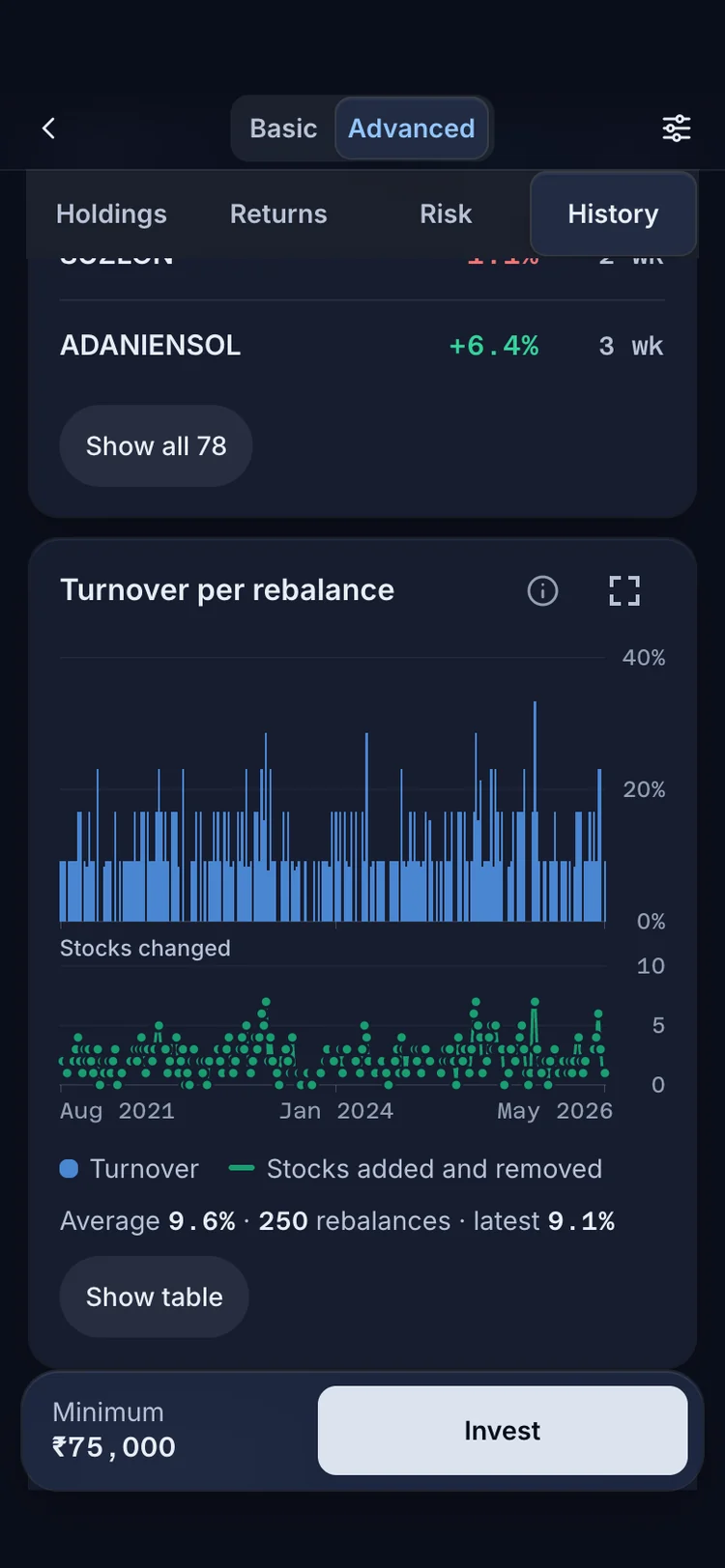
4The strategy’s History tab records the turnover at every rebalance in the model record. 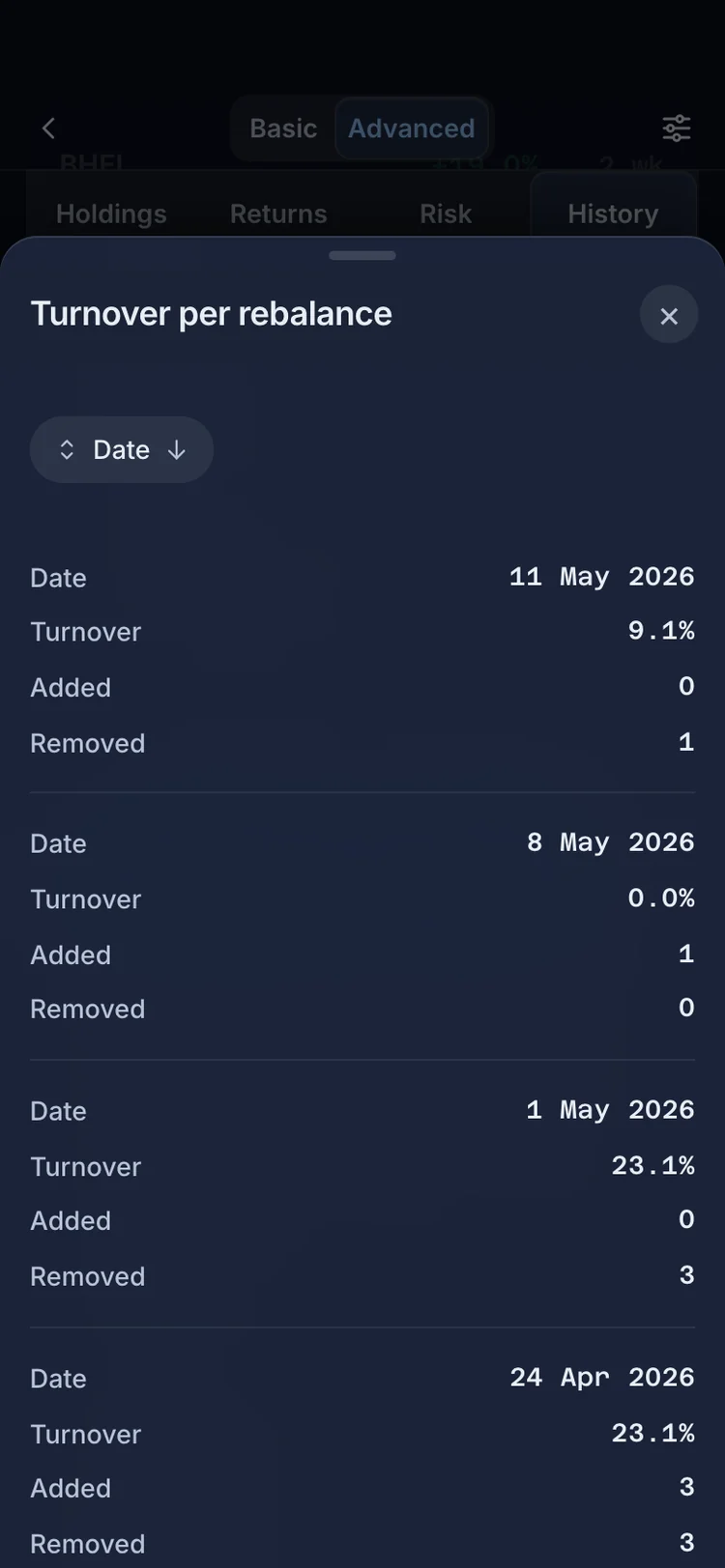
5Every rebalance in the model record: the date, the turnover and the stocks added and removed.
Where it sits in RupeeCase, in words
RupeeCase strategies hold NSE and BSE listed securities in your own demat; some carry a debt and gold sleeve for the same diversification reason, but none holds foreign shares. Dynamic Asset Allocator keeps a fixed equity core and lets two rules move the rest between Indian equity, debt and gold, rebalanced every 3 weeks: model CAGR 45.18%, deepest fall −10.57%, as of 27 Apr 2026. The multi asset guide covers the Indian side of the mix.
Questions investors ask
How much money can I send abroad to invest under LRS?
Up to USD 2,50,000 in each April to March financial year per resident individual, minors included, for all LRS purposes together, according to RBI's LRS FAQ.
Is TCS charged on investing abroad?
Yes, above a threshold. LRS remittances above ₹10 lakh for purposes other than education or medical treatment attract 20% TCS under section 394(1) of the Income-tax Act, 2025. It counts as tax paid and is set against your tax for the year.
Can I get the TCS back?
It is credited against your income tax for the year. If the TCS is more than the tax you owe, the excess is refunded after you file your return.
What is the easiest way to invest in US stocks from India?
An international ETF on NSE or a fund of funds, bought in rupees, needs no LRS paperwork. Check an ETF's price against its NAV first; the Nasdaq 100 ETF traded 12.96% above NAV on 12 Oct 2026.
How are international mutual funds taxed in India?
A listed international ETF held more than 12 months pays 12.5% on the gain; an unlisted fund of funds needs more than 24 months. Shorter holdings are taxed at your slab rate. The equity fund rates of 20% and 12.5% above ₹1.25 lakh do not apply.
How much should I invest internationally?
There is no single answer. In the test above, a 10% to 30% Nasdaq 100 ETF sleeve from 2012 to 2026 made the worst fall of a Nifty 50 portfolio shallower. This guide is education, not advice for your situation.