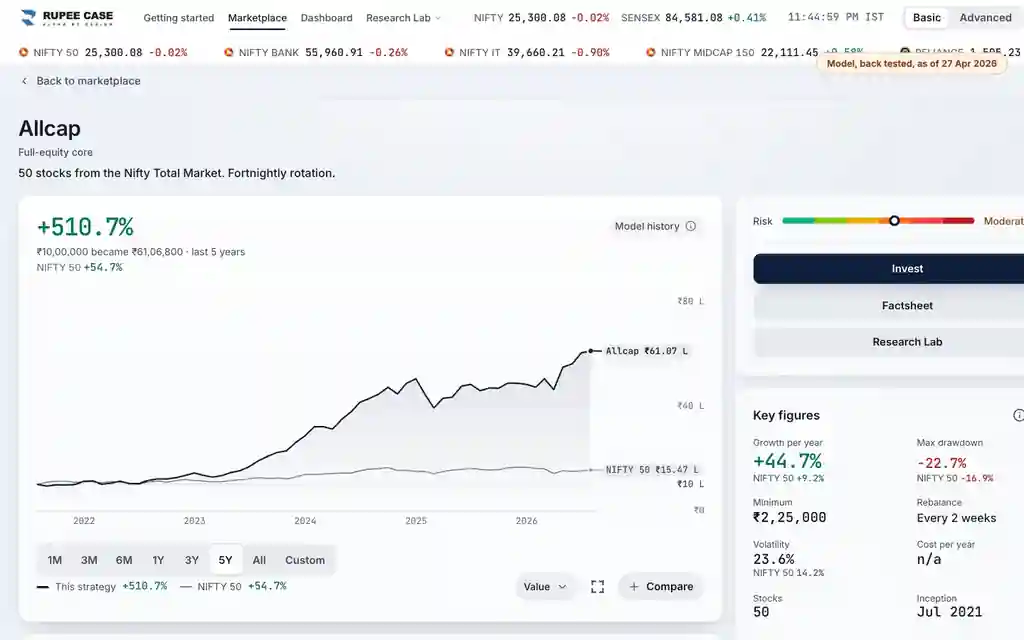
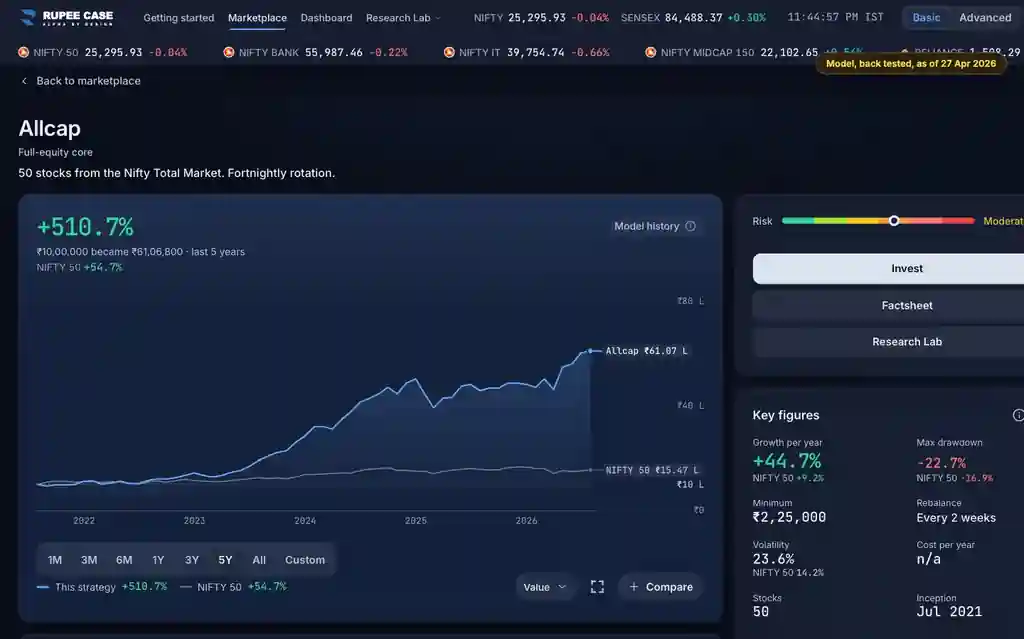
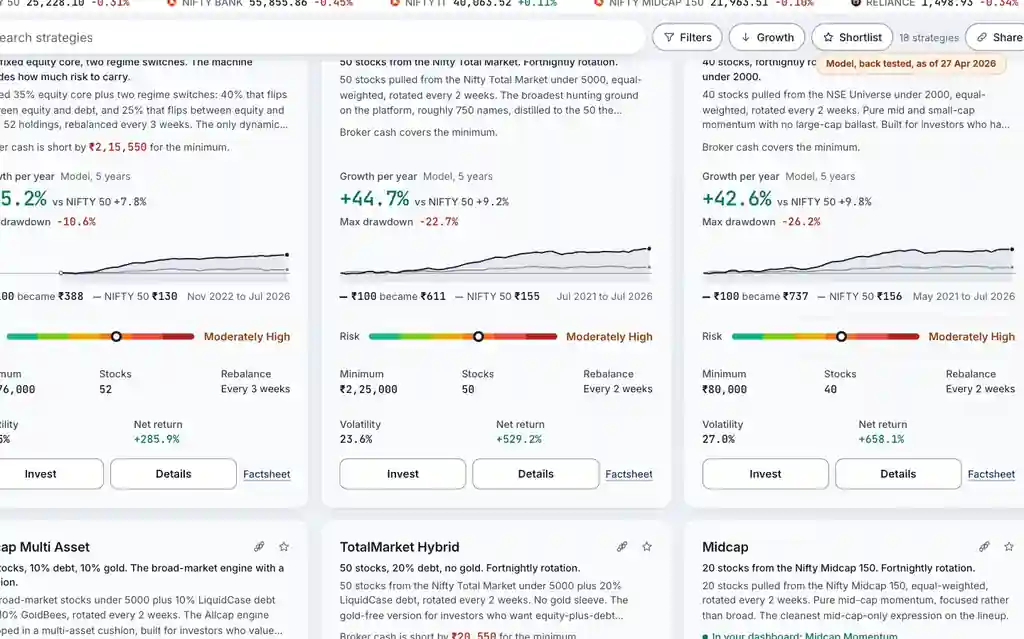
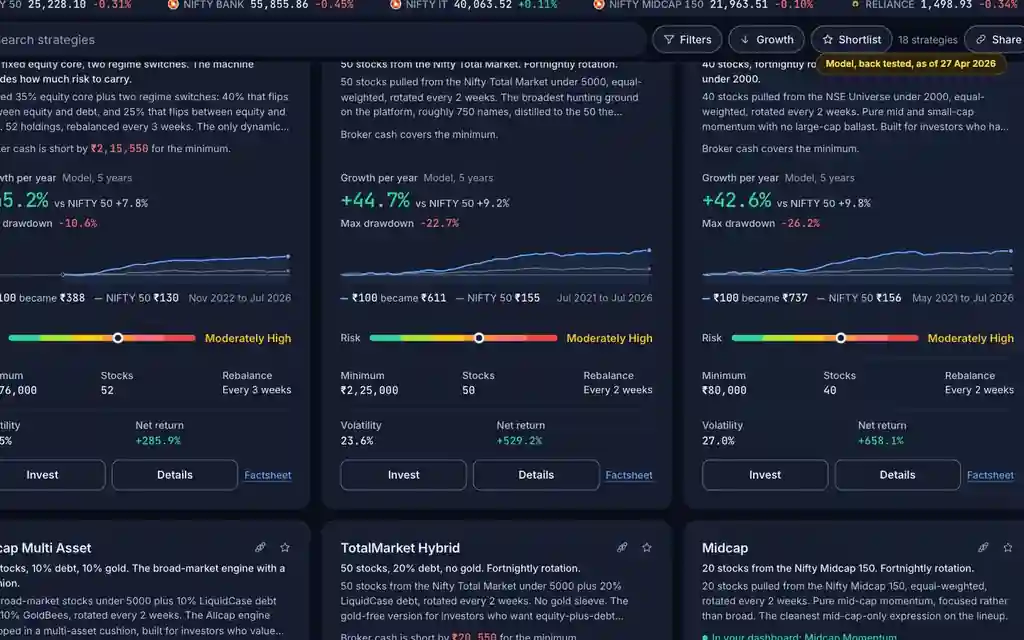
Where it is
ScreenMarketplace and StrategyBasic
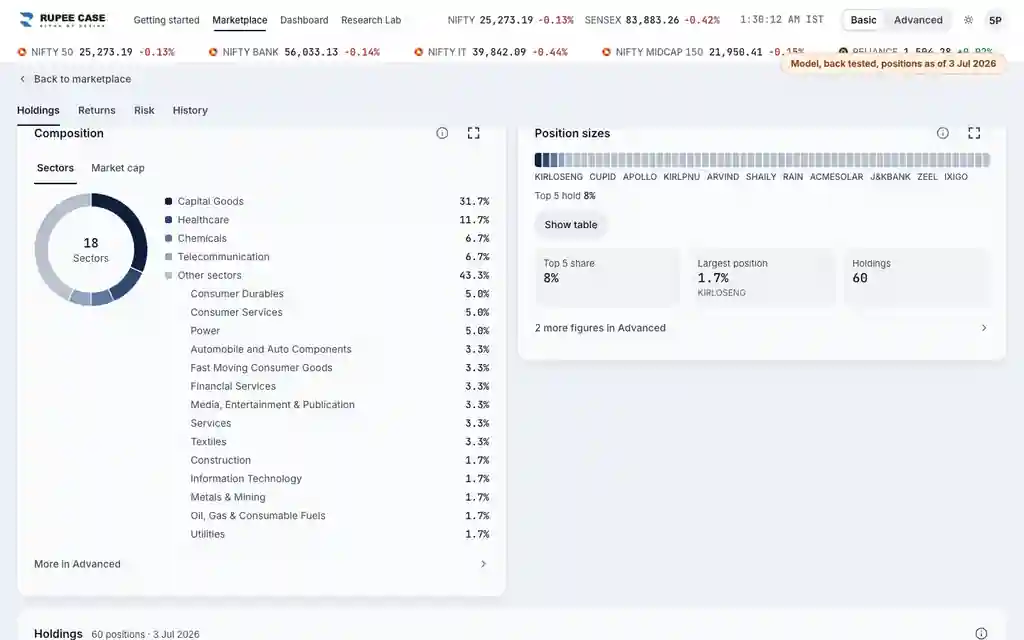
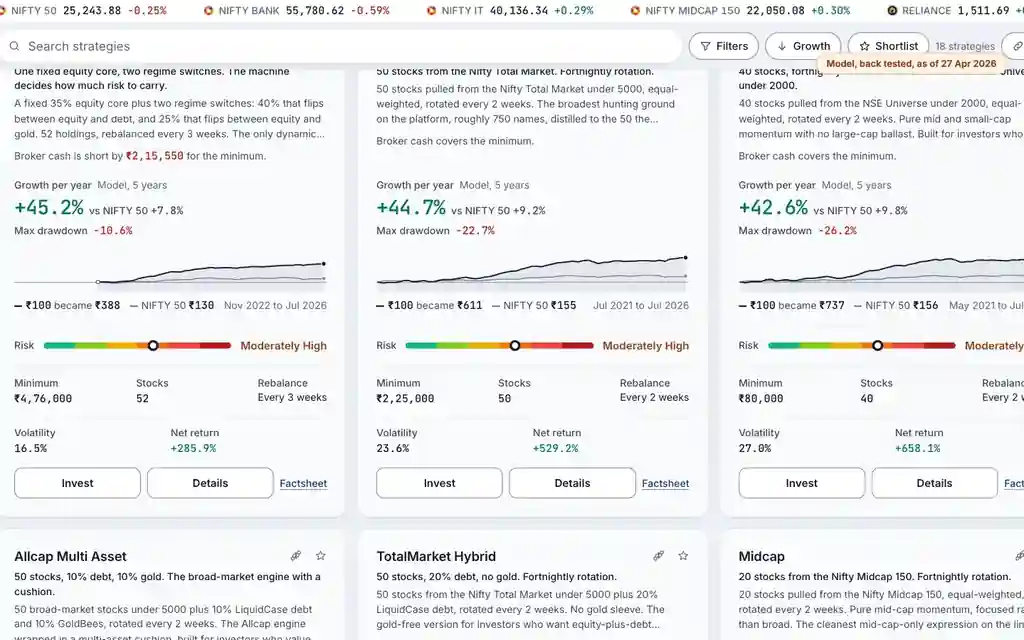
On each Marketplace card and in the strategy key figures (Basic). The turnover record is in the History tab (Advanced).
What it means
The rebalance figure says how often the strategy re-ranks its universe and resets its holdings: Weekly, Every N weeks or Monthly. At each rebalance it sells names that dropped out, buys names that came in and resets weights. Turnover per rebalance shows how much changed hands each time.
The formula
The cadence comes from the strategy settings. In this record, turnover is the share of names removed out of the names held before.
Rebalance: Weekly, Every N weeks or Monthly, set by the strategy
Turnover in the published record = names removed / names held before
Worked example
Example only
- A 50 stock strategy rebalances every 2 weeks
- At one rebalance 10 names leave and 10 come in
- Turnover: 10 / 50 = 20% of the names
How to read it
- A shorter cadence means more rebalances and usually more charges.
- Turnover near 0% means few changes; near 100% means most names changed.
- A due rebalance on your portfolio shows on the Dashboard.
Watch out
- Each rebalance has costs; the model figures are after estimated charges.
- Turnover here counts names, at equal weights; money weights can differ.
Transcript
The video has no sound. These are its on screen captions, chapter by chapter.
- 0:00Where it is. The card says how often the strategy rebalances.
- 0:16What it means. The cadence comes from the strategy settings. In this record, turnover is the share of names removed out of the names held before.
- 0:22Worked example. Worked example, example only: A 50 stock strategy rebalances every 2 weeks. At one rebalance 10 names leave and 10 come in. Turnover: 10 / 50 = 20% of the names.
- 0:28How to read it. In Advanced, History records the turnover at every rebalance.
- 0:43Watch out. Watch out: Each rebalance has costs; the model figures are after estimated charges. Turnover here counts names, at equal weights; money weights can differ.
Terms in this tutorial
- rebalancingPeriodic reset of portfolio holdings back to target weights or a new selection.
- turnoverPercentage of portfolio that changes in a rebalance.
- transaction costAll costs of trading including brokerage, STT, exchange charges, GST, and slippage.