Where it is
ScreenMarketplace and StrategyBasic
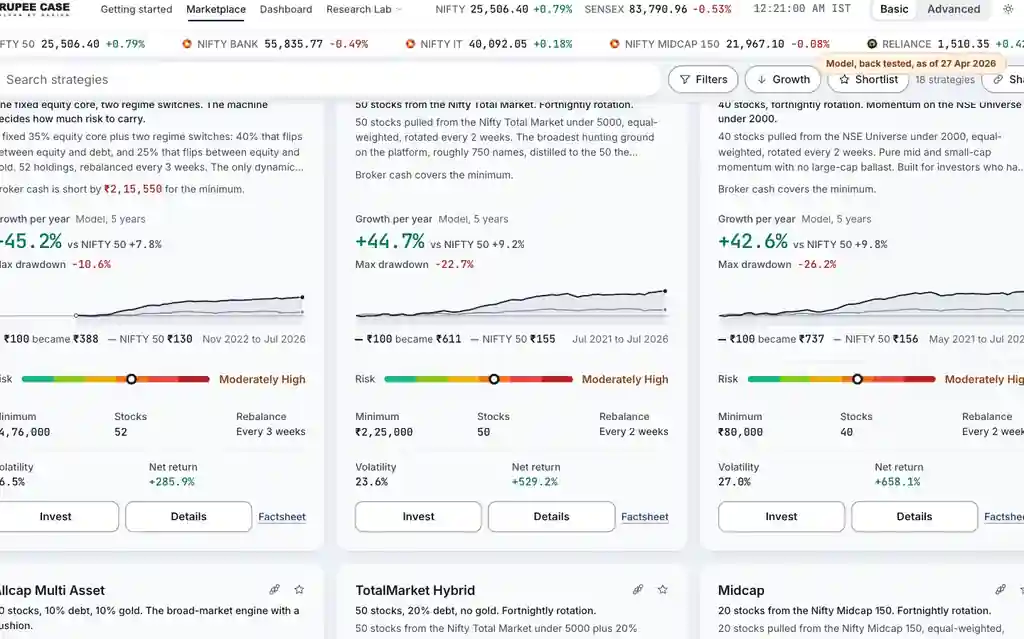
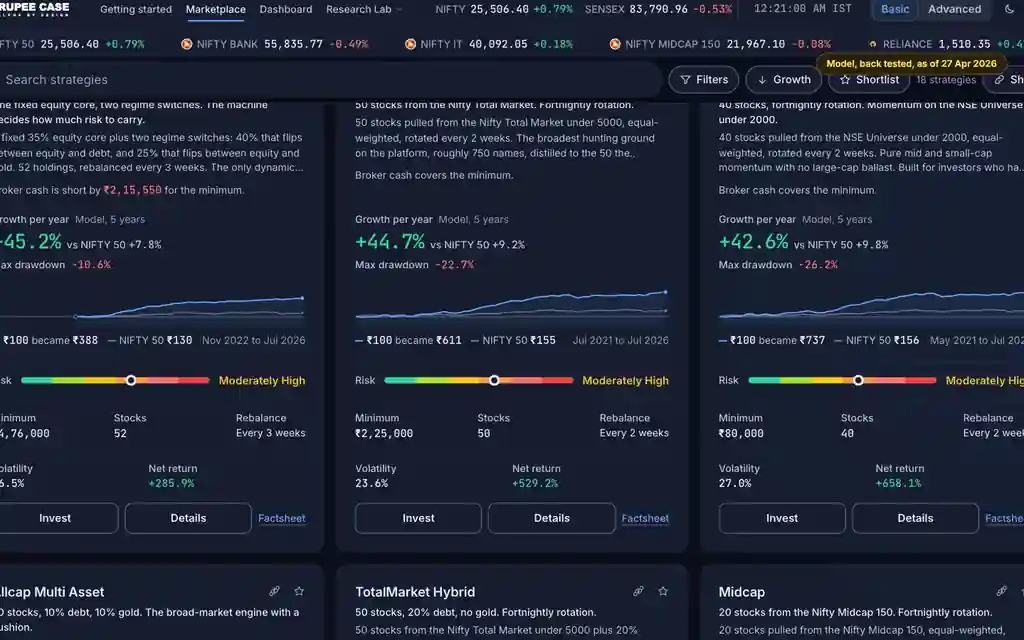
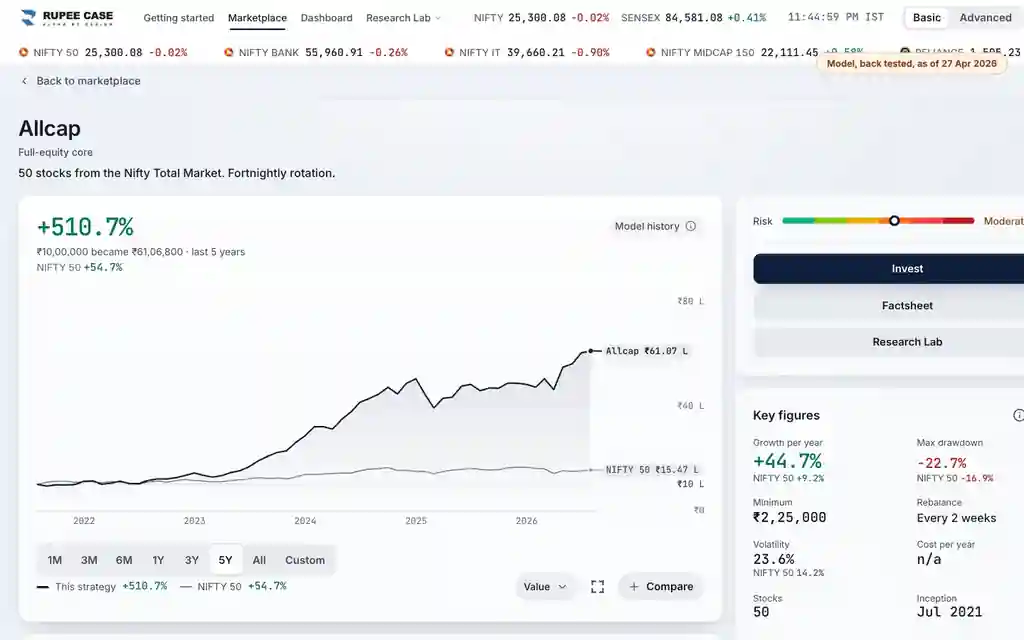
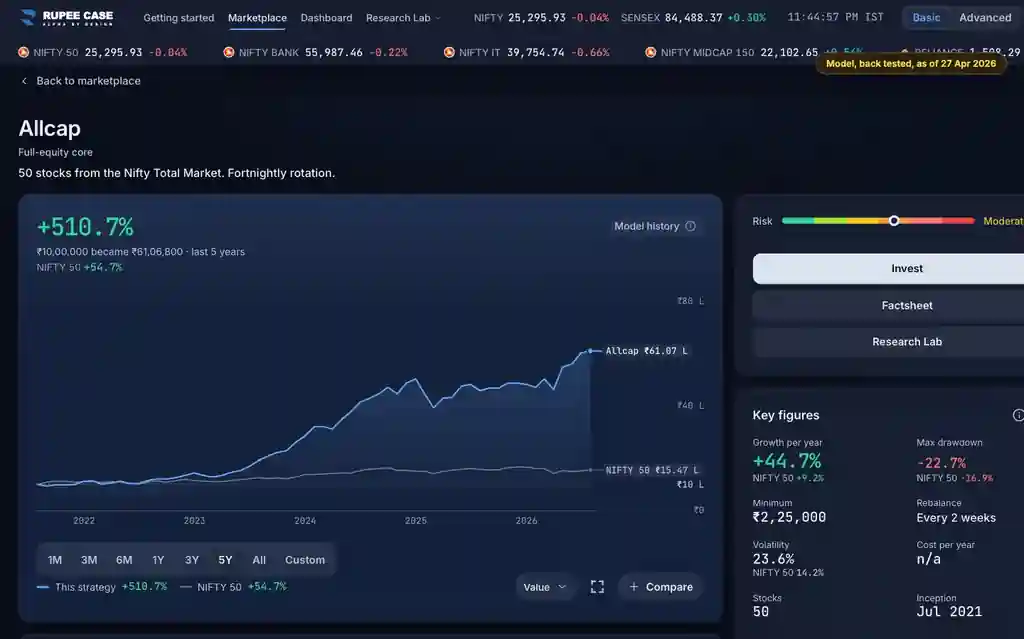
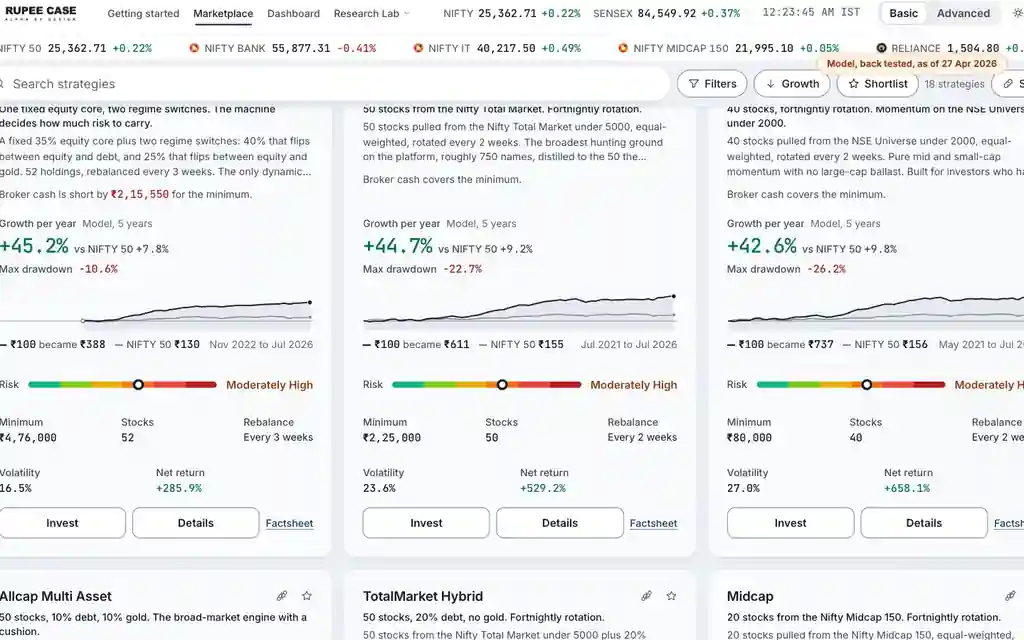
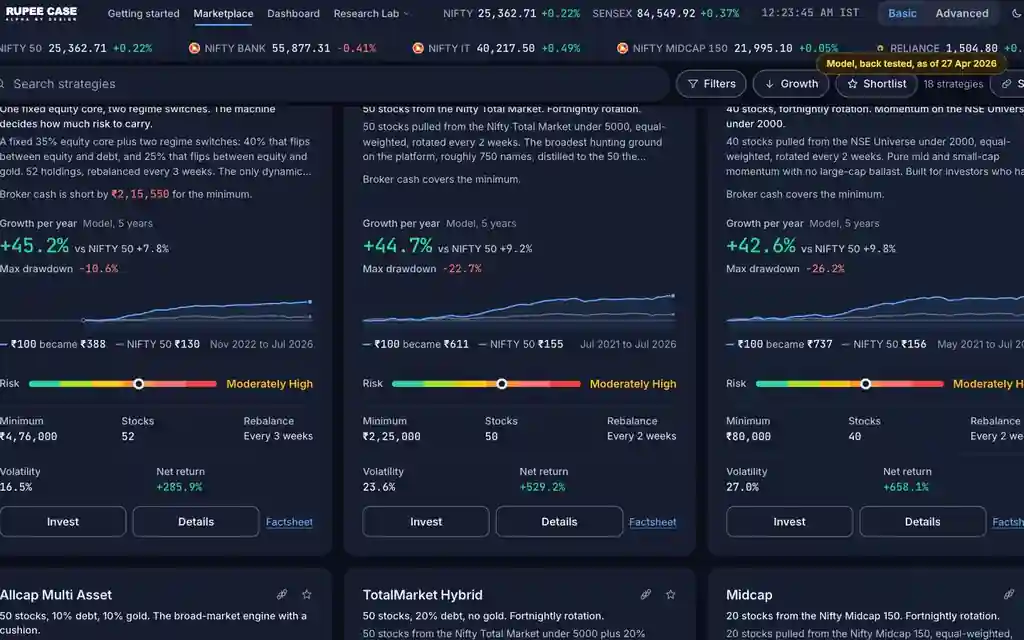
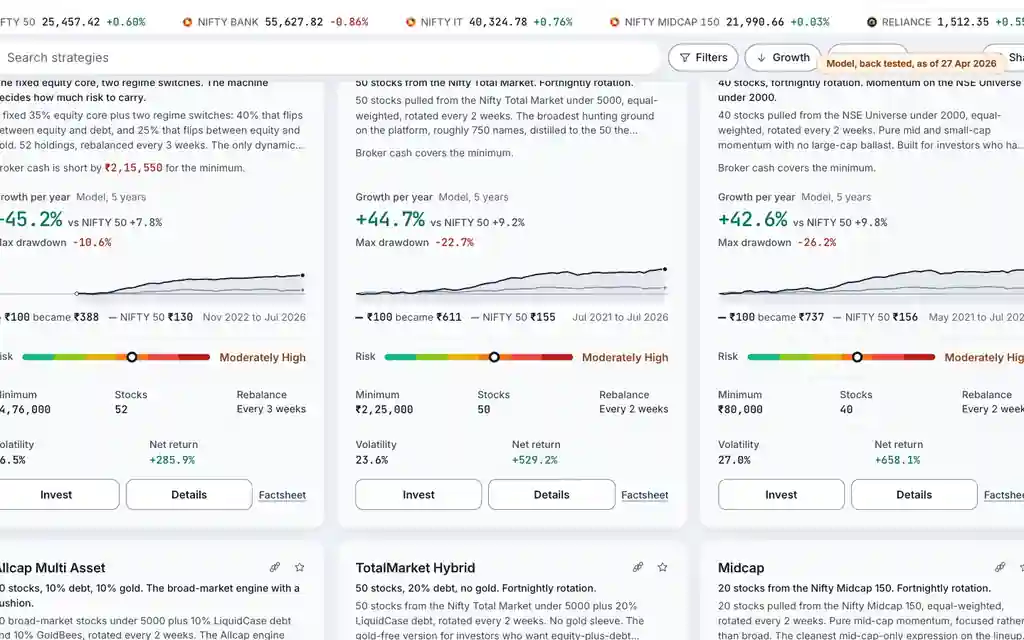
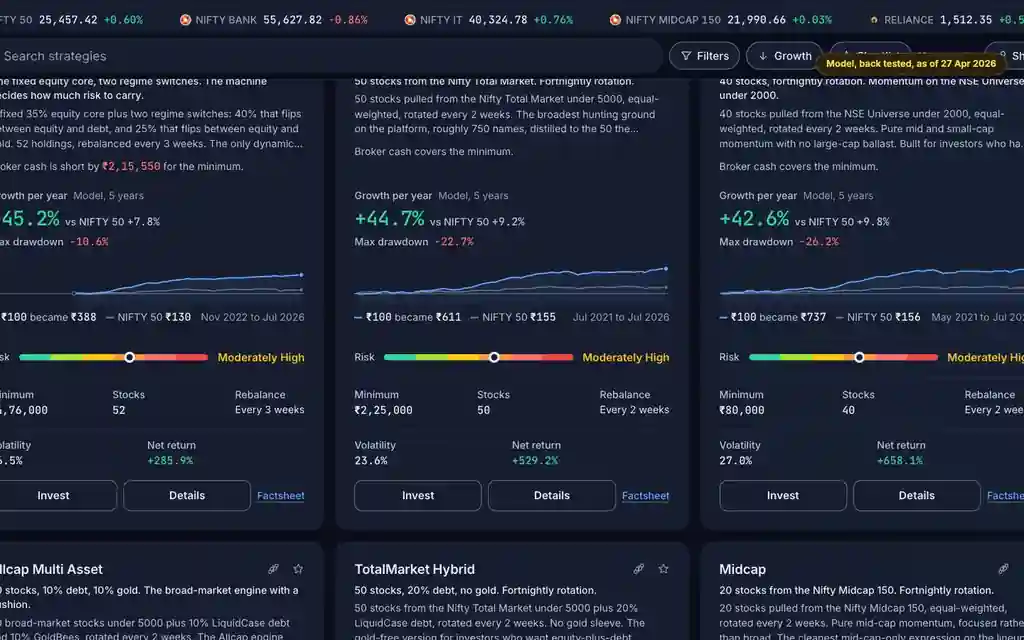
The large figure on every Marketplace card and the first key figure on a strategy page. Basic and Advanced.
What it means
Growth per year is the average yearly growth rate that, compounded, turns the model's start value into its end value. On a card it covers the full model history after charges. On a strategy page it covers the period you chose, and sits beside the benchmark's figure for the same span.
The formula
Take the end value over the start value, then take the root for the number of years. Subtract one.
Growth per year = (end value / start value) ^ (1 / years) - 1, years = days / 365.25
Not shown under half a year; the key figure needs a window of 1 year or more
Worked example
Example only
- Rs 1,00,000 grows to Rs 2,00,000 in 5 years
- (2,00,000 / 1,00,000) ^ (1 / 5) - 1 = 14.9% a year
- Total return is +100%; per year it is 14.9%
How to read it
- Read it beside the benchmark figure under it, for the same span.
- A higher figure with a deeper max drawdown means a rougher ride.
- Card figures are full history; strategy page figures follow the period.
Watch out
- Under a year the key figure switches to "Return, last N months".
- It is the model after estimated charges, not a live return.
- A few strong years can lift the average; check Year by year.
Transcript
The video has no sound. These are its on screen captions, chapter by chapter.
- 0:00Where it is. On a card it is the model over its full history, after charges.
- 0:19What it means. Take the end value over the start value, then take the root for the number of years. Subtract one.
- 0:25Worked example. Worked example, example only: Rs 1,00,000 grows to Rs 2,00,000 in 5 years. (2,00,000 / 1,00,000) ^ (1 / 5) - 1 = 14.9% a year. Total return is +100%; per year it is 14.9%.
- 0:31How to read it. Read it beside the NIFTY 50 figure under it.
- 0:44Watch out. On 1Y the card shows the return for the year instead.
Terms in this tutorial
- CAGRCompound Annual Growth Rate.
- backtestSimulation of a strategy on historical data to estimate past performance.