Where it is
ScreenStrategy key figures and Charges cardBasic
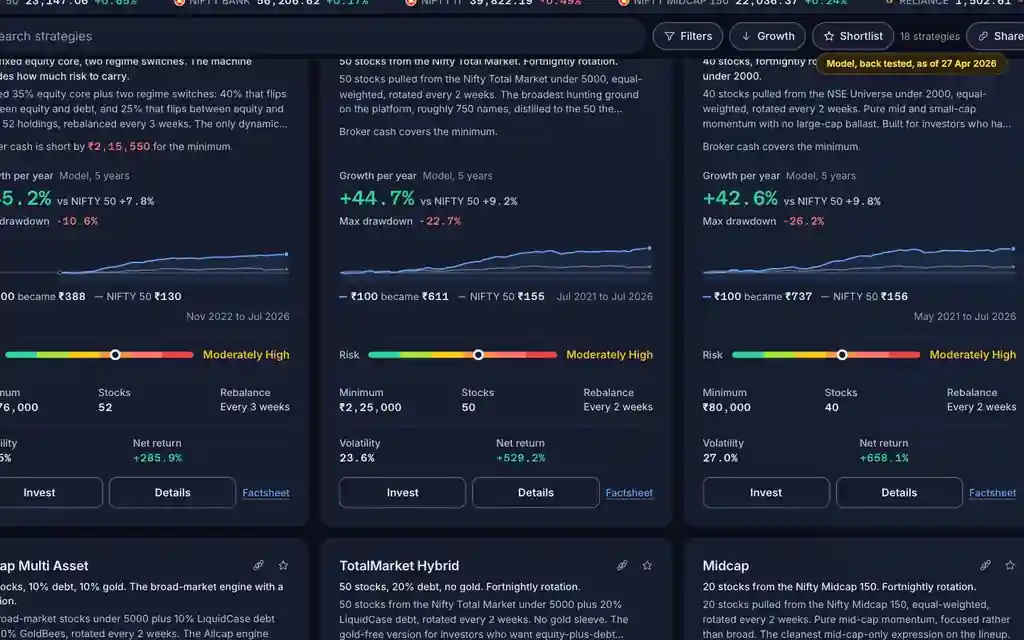
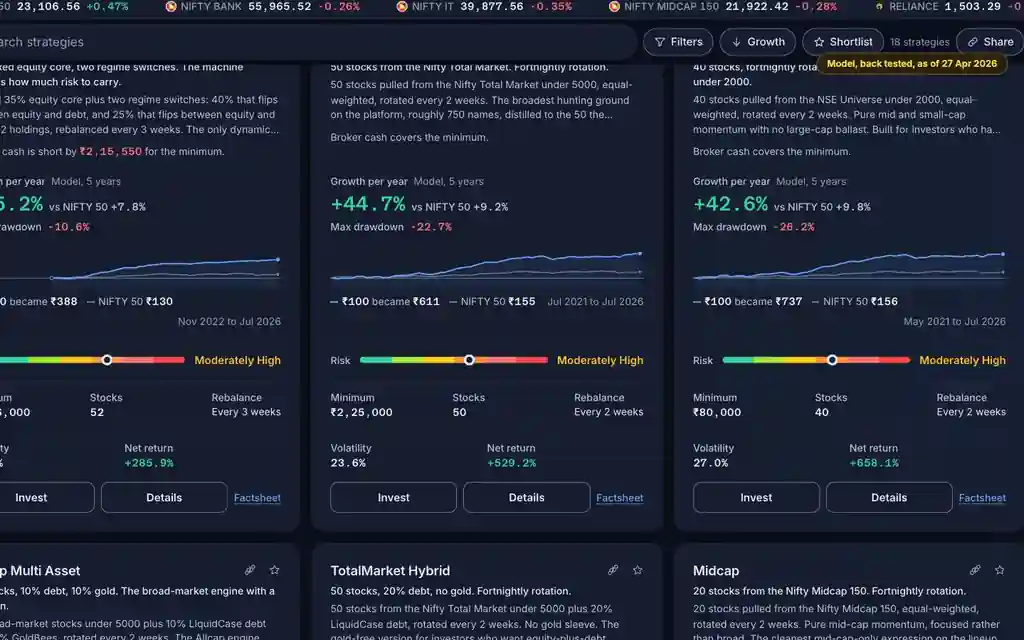
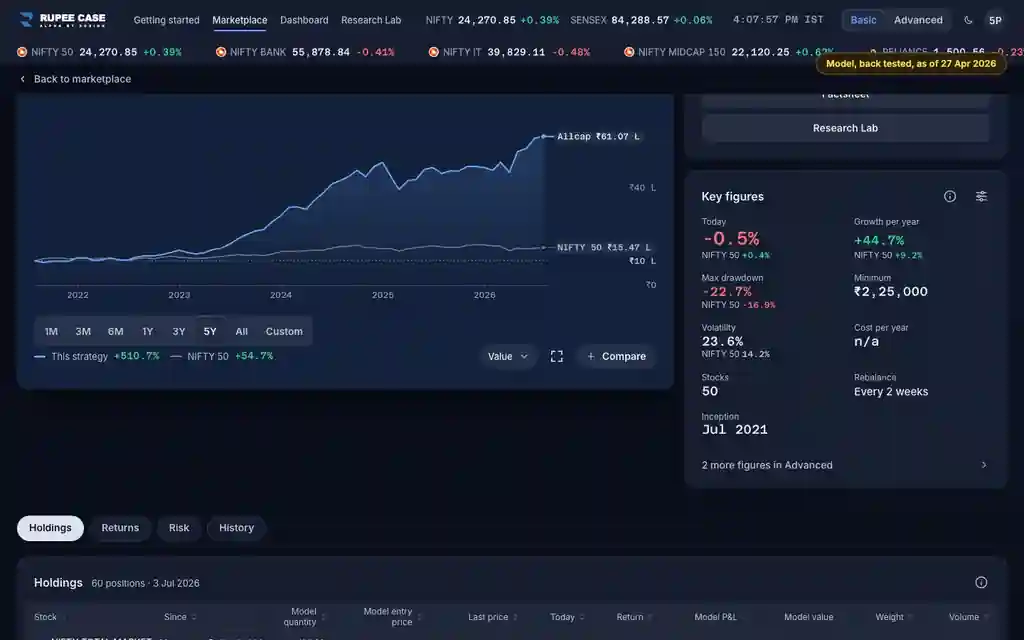
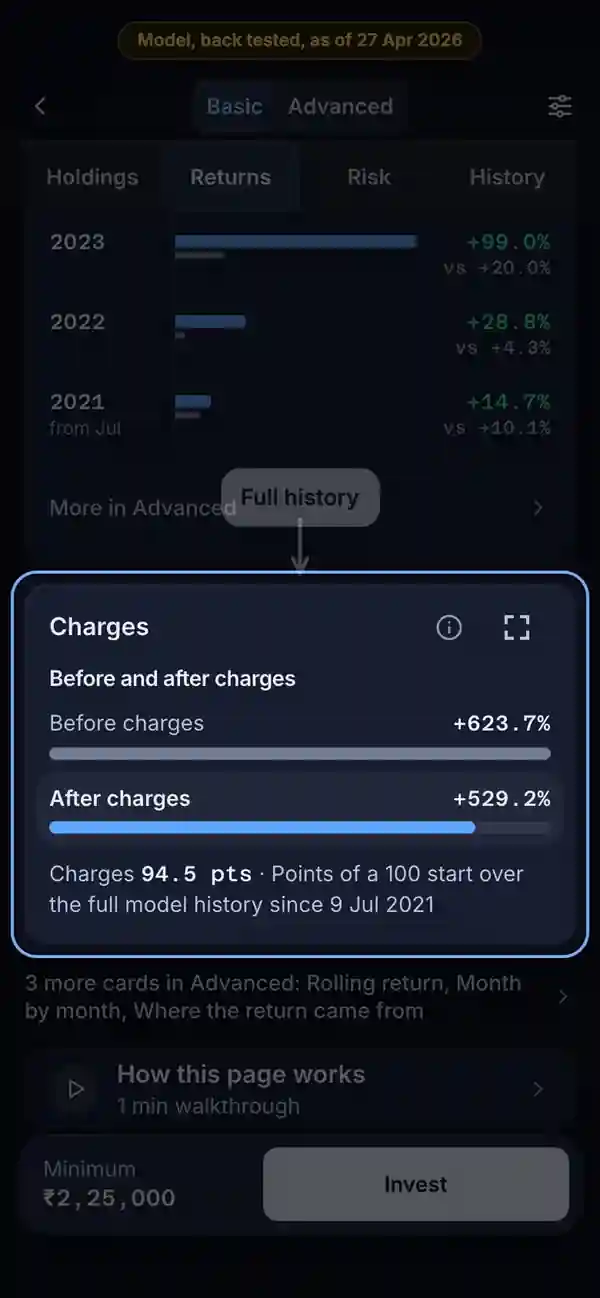
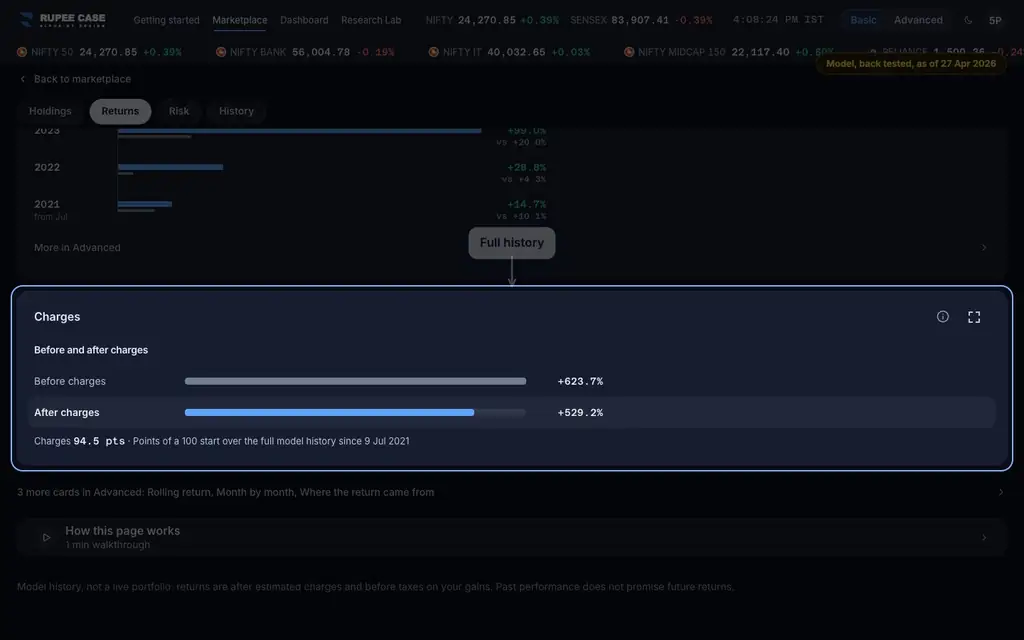
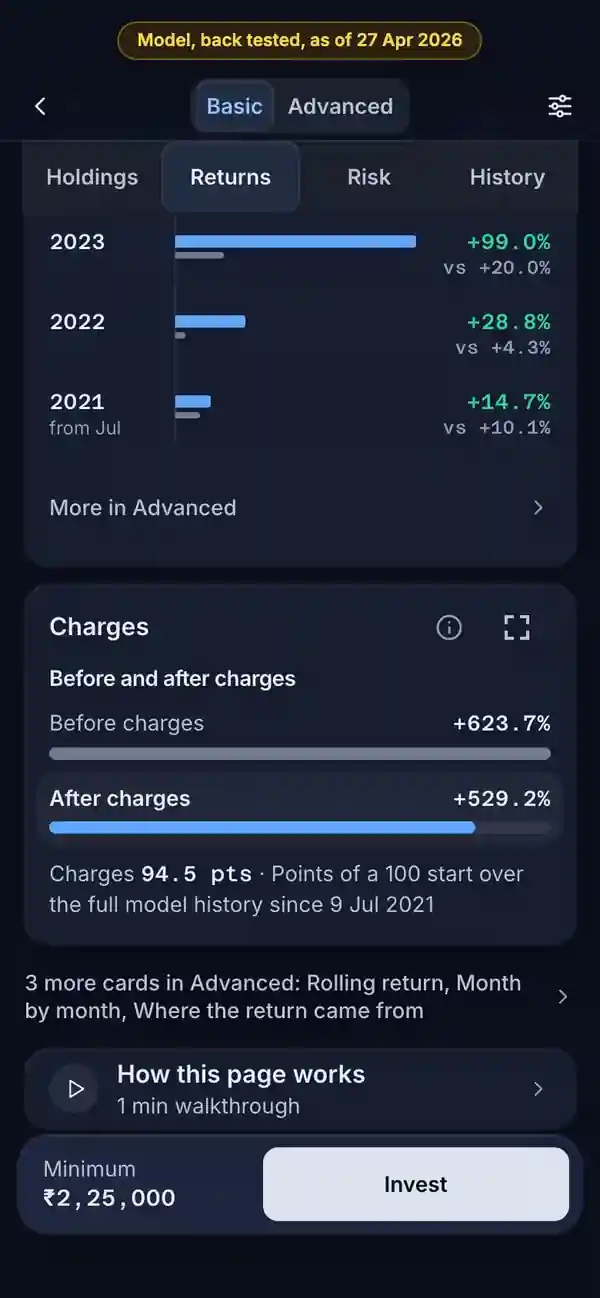
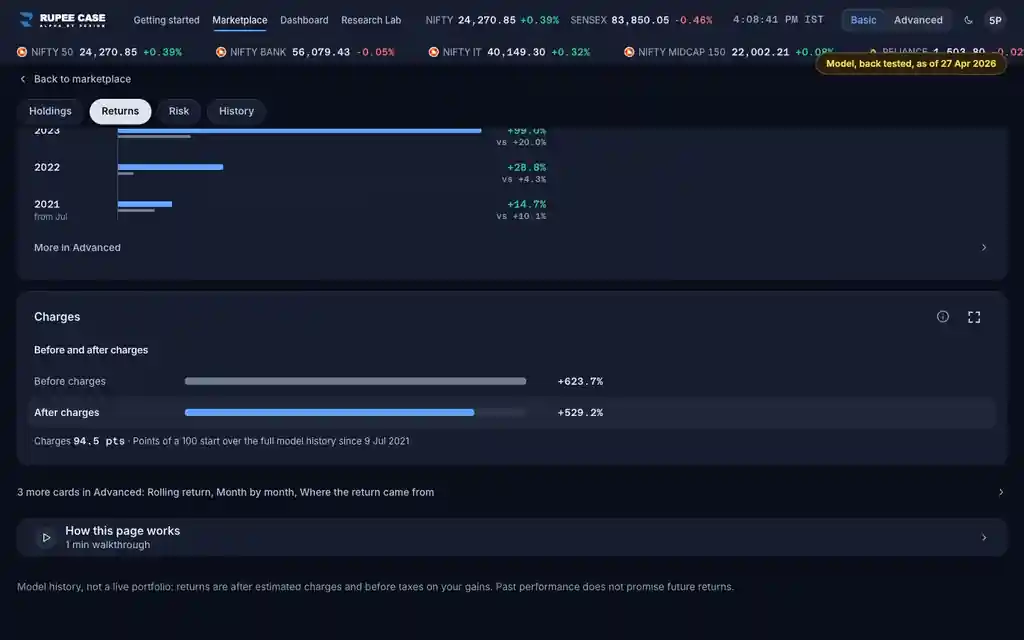
The strategy key figures: Cost per year opens a sheet by kind of charge when the figure is served. The Returns tab: the Charges card shows the model's estimated charges over the full history. Basic and Advanced.
Index in this video: Allcap (strategy page).
What it means
The model's estimated costs are split into kinds. Brokerage is the broker's commission on each trade. Securities transaction tax (STT) is charged on equity delivery trades. GST is charged on brokerage and exchange charges. Exchange charges are the exchange's transaction fees. One row holds the SEBI turnover fee and stamp duty. The row labelled Slippage and platform fee holds the platform fee charged on turnover. The Cost per year sheet lists each kind as a percent of the portfolio a year, and the rows add up to Cost per year.
The formula
Each kind of charge a year, as a share of the portfolio value; the rows add up to Cost per year. The Charges card shows the same kinds in points of a 100 start over the whole history.
Cost per year sheet: one row per kind above zero, percent a year, 2 decimals; rows add up to Cost per year
Charges card: points of a 100 start over the full model history
Slippage and platform fee: the platform fee on turnover
SEBI fee and stamp duty: one row
Worked example
Example only
- Before charges a 100 start became 700; after charges, 600
- Charges: 100 points of that 100 start
- Brokerage 15 of those points: 15% of the charges
How to read it
- Each kind grows with turnover: a strategy that trades more pays more of each.
- On Allcap the Charges card reads 94.5 points over the full history.
- In this recording Cost per year reads n/a: no published yearly figure.
Watch out
- The Charges card is always full history, whatever the period.
- The slippage label holds only the platform fee; price impact is not estimated.
- Taxes on your gains are not part of these charges.
Transcript
Tap Sound on for voice and music. These are the captions of the video, chapter by chapter.
- 0:00Where it is. Cost per year opens its kinds of charge when it is served.
- 0:13What it means. The Charges card shows the model's charges over the full history.
- 0:27Worked example. Worked example, example only: Before charges a 100 start became 700; after charges, 600. Charges: 100 points of that 100 start. Brokerage 15 of those points: 15% of the charges.
- 0:33How to read it. Here: 94.5 points of a 100 start over the whole history.
- 0:49Watch out. Watch out: The Charges card is always full history, whatever the period. The slippage label holds only the platform fee; price impact is not estimated. Taxes on your gains are not part of these charges.
Terms in this tutorial
- BrokerageThe fee a broker charges for carrying out a buy or sell order.
- STTSecurities Transaction Tax.
- GSTGoods and services tax, 18 percent, charged on brokerage and on exchange and SEBI charges, not on the value of the shares themselves.
- Exchange chargesA fee NSE or BSE charges on the value of every trade, passed on by the broker in the contract note.
- Stamp dutyA duty the buyer pays on shares bought: 0.015 percent of the value on a delivery trade, the same in every state since July 2020.
- Platform feeA fee for using a platform, charged on top of the broker's and the exchange's charges.
- Cost per yearThe estimated trading charges of a year, as a percent of the portfolio's value.
- ChargesThe costs of trading taken out of a return: brokerage, securities transaction tax, GST, exchange charges, SEBI fee and stamp duty, and a platform fee.